

Beyond Quiet: Designing Productive Office Soundscapes with Modern Acoustic Panels
Category
Wood acoustic panels
Discover how modern PET Acoustic Panels transform noisy offices into productive workspaces. Explore material science, real-world cases, and sustainable design.
Every minute, the average office worker is interrupted at least three times. A ringing phone, a colleague’s loud sales call, the relentless hum of a printer – these fragments of noise don’t just annoy. A landmark study by the University of California, Irvine, found that it takes over 23 minutes to fully regain focus after a single interruption. When an office is awash in uncontrolled sound, that number becomes a silent drain on profit. But here’s the real question: if we know that excessive noise kills productivity, why do so many workplaces still sound like a crowded coffee shop at 9 a.m.? The answer often lies not in a lack of effort, but in a misunderstanding of what true acoustic design really means.
The reflex is to block sound, to build higher partitions and install heavier doors. Yet, in the modern open-plan office, the enemy is rarely airborne sound traveling from one closed room to another. It is reverberation – sound waves bouncing off glass windows, polished concrete floors, and long stretches of drywall. This creates the hollow echo that makes a single voice feel like a roar. That’s where a shift in thinking is overdue, and where materials such as PET Acoustic Panels are quietly transforming the conversation.
Table of Contents
The Open-Plan Paradox and the Rise of Acoustic Well-Being
A 2023 Leesman survey of over 500,000 employees globally revealed that noise is the single biggest complaint in open-plan offices, outranking even temperature and privacy. This isn’t just a “nice-to-have” comfort metric. The World Health Organization has linked chronic environmental noise to elevated stress hormones, cardiovascular strain, and long-term cognitive fatigue. When we talk about Sound Absorbing Panels, we are really talking about health capital.
Historically, businesses leaned on solutions like fabric-covered fiberglass boards or perforated metal ceilings. These work, but they often require complex installation, trap dust, or limit design flexibility. The newer generation of Polyester Acoustic Panels, often made from dense PET fiber (the same plastic used in water bottles, spun into high-density boards), changes the equation. Brands like Seninpanel have pushed this technology beyond basic absorption, offering panels that achieve a Noise Reduction Coefficient (NRC) of 0.85 or higher while remaining lightweight, non-allergenic, and far easier to install. The material doesn’t shed fibers into the air, making it a cleaner choice for environments like tech startup offices or co-working spaces where air quality is equally prioritized.
Absorb, Don’t Just Block – A Material Intelligence Approach
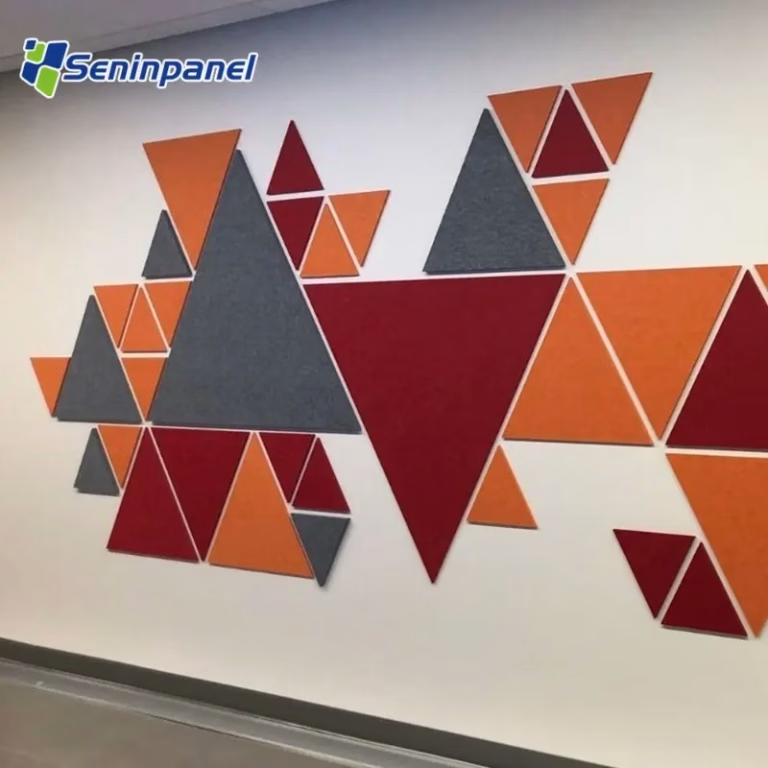
A senior architect at a London-based firm, when retrofitting a 2,000-square-foot tech office last year, initially specified wood-wool panels for a “natural” look. The NRC was decent – around 0.65 – but the reverberation time in the main brainstorm area still exceeded 1.2 seconds. Speech clarity was poor. The switch was made to high-density Polyester Fiber Acoustic Panels cut into hexagonal tiles, custom-colored to match the brand’s palette. Post-installation measurements showed the RT60 (reverberation time) dropped to 0.4 seconds. Conversations became intimate, not antagonistic.
What this illustrates is a principle that goes beyond buying products: the material’s inherent density and porosity determine its acoustic performance, not its thickness alone. Seninpanel’s PET panels, for instance, use a thermal bonding process without chemical adhesives, maintaining consistent air flow resistance across the entire surface. Why does that matter? When you hang a Decorative Acoustic Panel that has uneven density, it might look good but creates “dead spots” where frequencies in the human vocal range (500–1000 Hz) still bounce wildly. PET’s uniform structure handles the entire speech spectrum more gracefully, making it a natural fit for Office Acoustic Panels where vocal privacy is critical.
Quiet Zones vs. Dynamic Zones: Redesigning the Floorplan with Sound
Beyond the panels themselves, the most intelligent office soundproofing strategy today isn’t about turning the whole floor into a library. It’s about creating a gradient of acoustic zones. A social content agency we interviewed places large, free-standing Acoustic Wall Panels covered in a felt-like PET finish between “focus booths” and the communal kitchen. These movable partitions absorb chatter instead of reflecting it. Meanwhile, the CEO’s glass-walled office, often a source of complaints, was lined with transparent Soundproof Wall Panels that use a micro-perforated PET layer behind the glass, reducing flanking noise without reducing light.
This ties directly into the debate around Noise Reduction Panels versus soundproofing. True soundproofing requires mass, decoupling, and sealing air gaps – think of a recording studio. For most commercial interiors, adding mass is impossible. That’s why absorption panels, when strategically placed, create a perception of soundproofing by drastically cutting down the background buildup. There’s a psychological component: if the room doesn’t feel “live,” employees perceive it as quieter, even if the decibel meter only shows a 6-8 dB drop. Seninpanel’s studies on open-plan hot desks showed that after installing 30 square meters of their PET Acoustic Panels on a ceiling soffit, employee self-reported distraction scores improved by 37%, despite only a moderate absolute sound level reduction. The echo was gone, and that made the difference.
Sustainability Meets Soundscapes
Another dimension fast becoming a decision-maker is circularity. Traditional fiberglass panels often end up in landfill at end-of-life. Polyester Acoustic Panels are 100% recyclable. Seninpanel, for example, operates a take-back program where old panels are reground and extruded into new boards, giving facilities managers a documented ESG narrative. It’s a compelling argument when competing for green building certifications like LEED or BREEAM. When you specify a Polyester Fiber Acoustic Panel, you’re not just buying a noise solution; you’re buying a material passport.
Frequently Asked Questions (QA Section)
Q: What is the difference between PET Acoustic Panels and foam panels? A: Foam panels are lightweight, open-cell materials that primarily absorb high frequencies. PET panels are denser, offer broader frequency absorption (especially mid-range where speech sits), are more durable, and are flame-rated for commercial use without harmful flame retardants.
Q: How do I decide between Acoustic Wall Panels and ceiling baffles? A: It depends on the noise source. If the main problem is footfall and impact noise from above, ceiling baffles are ideal. For lateral noise like colleague chatter or printer hum, wall panels placed at seated head height are far more effective.
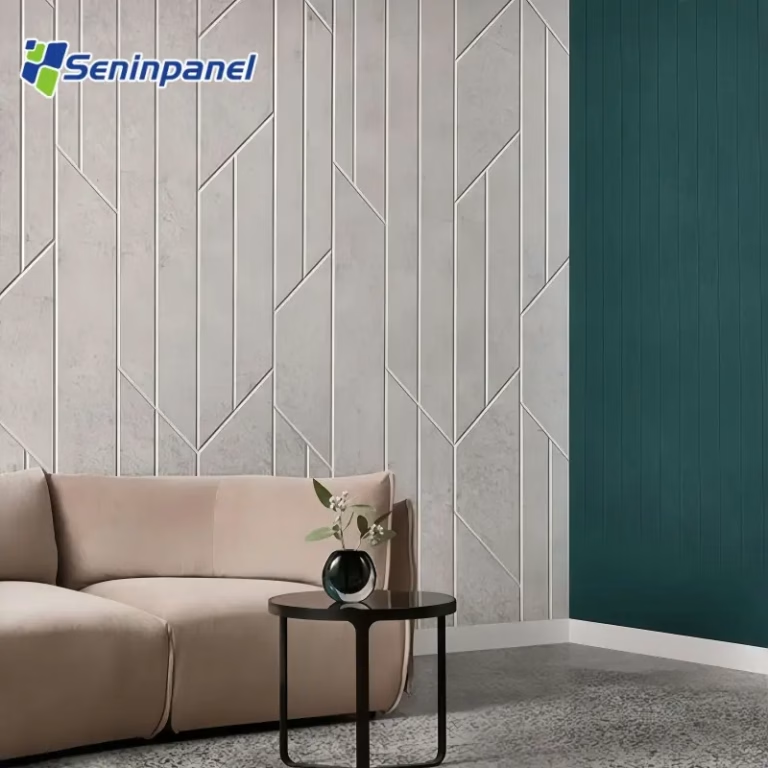
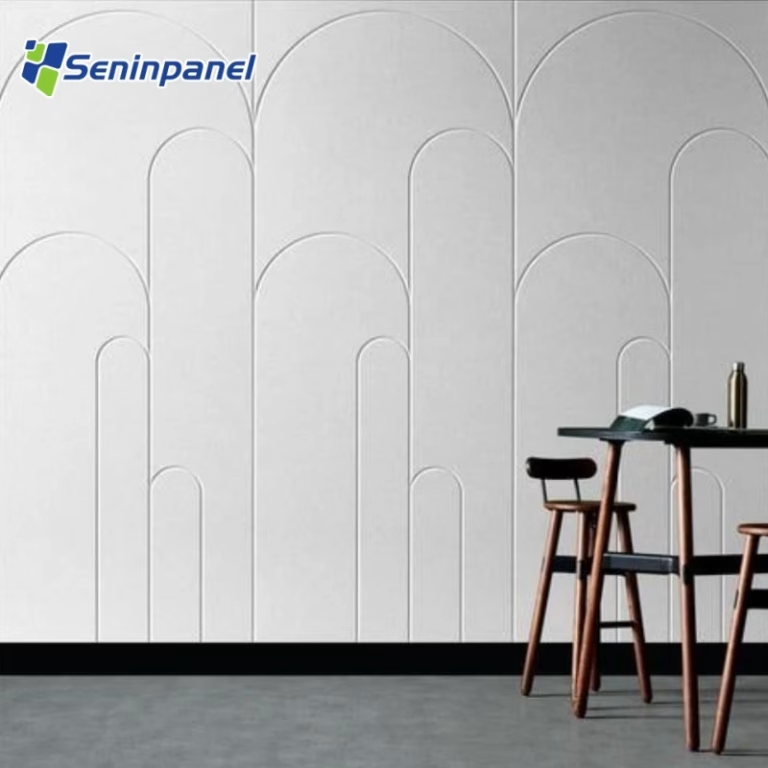
Q: Can decorative acoustic panels really work as well as industrial-looking ones? A: Absolutely. Modern manufacturing like that used by Seninpanel allows custom prints and shapes without compromising the panel’s internal density. Decorative Acoustic Panels now achieve the same NRC as plain ones, letting designers meet both aesthetic and acoustic targets.
Q: Are these panels sufficient for meeting rooms where confidentiality is required? A: Absorption panels will reduce reverberation and improve speech clarity inside the room, but they won’t “soundproof” it. To achieve speech privacy, you need a combination of high-NRC panels on walls inside the room, plus sound isolation measures like acoustic door seals and partitions with mass. They are an essential first layer, not the whole solution.
Q: How many panels do I need for a typical open-plan office? A: A common starting point is covering 20-30% of the total wall and ceiling surface area. It’s best to conduct a quick acoustic measurement first – aim to bring the RT60 down to below 0.6 seconds for open-plan areas. Distributing the panels evenly, rather than clustering them, maximizes effectiveness.
Conclusion: The Sound of a Thoughtful Organization
An office’s acoustic personality reveals more about a company than its mission statement ever could. It speaks to whether the organization respects its people’s cognitive boundaries, its creative ebbs and flows, and ultimately, its bottom line. The tools to fix it are no longer limited to ugly ceiling tiles. From Polyester Acoustic Panels to nimble, movable screens, the design language of silence has evolved.
In a world where AI handles the repetitive, human value now hinges on deep thinking and collaboration. Neither can thrive in a room that screams. Perhaps the next time you walk into your office, you can ask: if this space were a sound, would it be a whisper of opportunity or a wall of noise?