


Redefining Open Office Acoustics: How PET and Polyester Acoustic Panels Elevate Productivity and Well-Being
Category
Wood acoustic panels
Discover how PET and polyester acoustic panels reshape open offices for better focus. Explore sound absorbing solutions and practical design tips.
Open plan offices were supposed to be the pinnacle of collaborative culture. Tear down the walls, and ideas will flow. Yet somewhere between the ping-pong table and the endless video calls, a quieter truth emerged: sound can make or break the modern workplace. Studies consistently show that unwanted noise is the number one complaint in open offices, directly eroding focus, increasing stress, and even reducing job satisfaction. So, how did we end up designing spaces that look brilliant but sound chaotic? And more importantly, what can we do now—using materials like PET Acoustic Panels and Polyester Acoustic Panels—to reclaim the acoustic comfort that productivity demands?
This isn’t about returning to grey cubicle farms. It’s about understanding that genuine collaboration requires acoustic clarity just as much as it requires open sightlines. At the heart of this shift are advanced Sound Absorbing Panels that don’t merely dampen noise but reshape how teams experience a room. Brands like Seninpanel have been quietly refining these materials, proving that high-performance Polyester Fiber Acoustic Panels can be both a design asset and an acoustic engine. This article explores how thoughtful acoustic treatment transforms open offices from noisy battlegrounds into adaptable, healthy environments—without asking anyone to whisper.
Table of Contents
The Real Cost of Ignoring Office Acoustics
Noise isn’t just annoying; it’s physiologically draining. Research from the University of Sydney identified noise as the leading cause of workplace dissatisfaction, while a Steelcase study found that employees lose as much as 86 minutes a day to auditory distractions. That’s a full-time salary essentially leaking through the ceiling. The culprit is rarely one loud event. Instead, it’s the accumulation of “acoustic smog”—the keyboard clicks, chair scrapes, fragmented phone conversations, and the clipped tones of a colleague who doesn’t realise their voice carries.
Traditional remedies often miss the mark. Hard surfaces like glass, concrete, and drywall may look sleek but they reflect sound, creating a flutter echo that makes speech unintelligible and overall noise levels climb. Good acoustic design, therefore, starts by recognising that a space must manage three things: blocking external noise, absorbing internal reflections, and covering or masking residual sound. That’s where materials like Acoustic Wall Panels and Soundproof Wall Panels begin to earn their keep—not by sealing the room completely (a common misconception) but by strategically taming the frequencies that interfere with focus.
Pinpointing Noise Sources: A Crucial First Step
Before hanging a single panel, you need to map the enemy. In open offices, noise rarely has a single address. It comes from:
- External intrusion: Traffic, construction, or even footsteps from the floor above. While structural insulation helps, interior surface treatments often play a supporting role.
- Equipment and systems: HVAC vents, copiers, and server fans generate a steady, low-frequency hum that quietly fatigues the brain.
- Human activity: The most dynamic source. It includes everything from impromptu stand-up meetings to the classic “I just need five minutes” conversation that lasts twenty.
Identifying where these sources overlap lets you design a layered approach. For instance, areas near break rooms or high-traffic corridors might prioritise robust Noise Reduction Panels and freestanding screens, while deeper desk clusters benefit from overhead acoustic ceiling baffles that catch sound before it bounces. This zoning mindset prevents the common trap of plastering panels everywhere without solving the specific acoustic pattern of the room.
The Modern Solution: PET and Polyester Acoustic Panels
For decades, acoustic treatment meant either bulky foam wedges (effective but fragile and dusty) or heavy fibreglass wraps (excellent absorption but requiring sealed edges and careful handling). The rise of PET Acoustic Panels—made from recycled polyethylene terephthalate, often from post-consumer bottles—changed the game. These panels deliver high noise reduction coefficients (NRC values frequently above 0.75) while being lightweight, moisture-resistant, and safe to touch. No formaldehyde, no glass fibres, no itching.
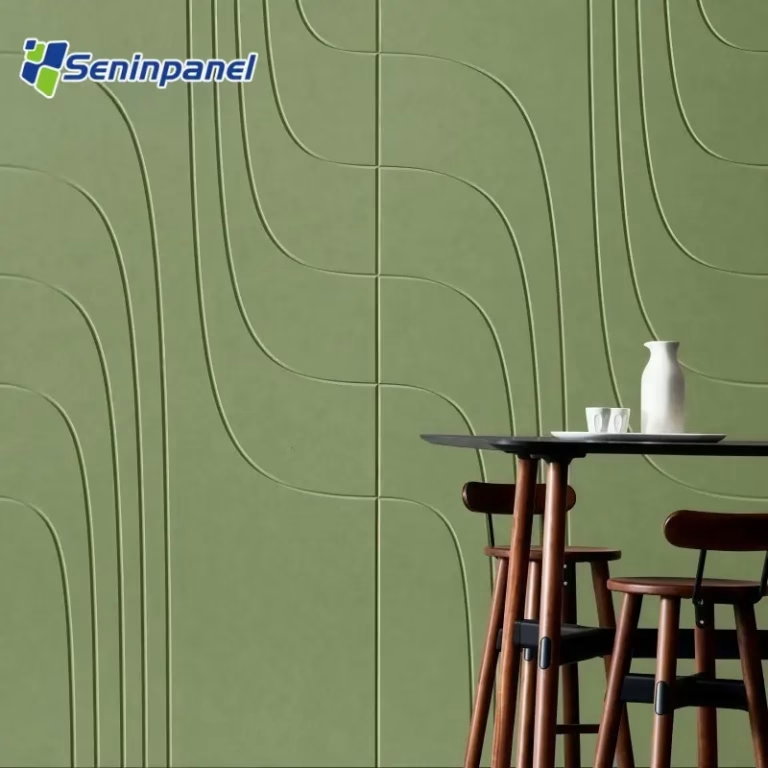
Seninpanel has embraced this material innovation by engineering Polyester Acoustic Panels that fuse technical performance with a soft, textile-like finish. Available in a wide colour palette and shapes—from classic rectangles to hexagons and baffles—they offer what architects call “visual softness.” That matters because an office that looks calm tends to feel calm. The panels’ density and fibre structure absorb a broad range of frequencies, which is crucial in open environments where conversations, phone alerts, and keyboard noise all occupy different bands.
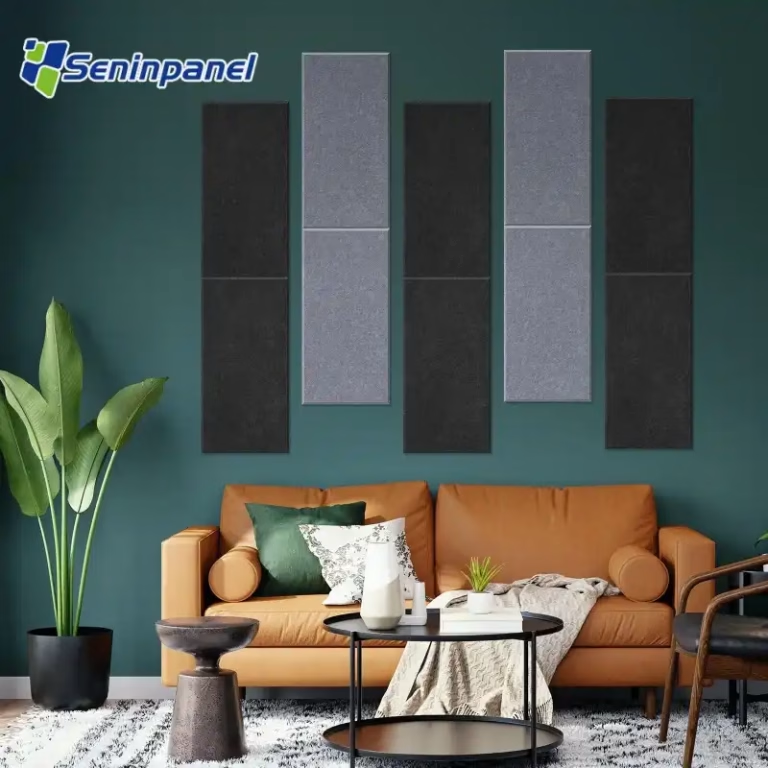
But one material alone isn’t a miracle. The real art lies in placement. Ceiling-mounted Acoustic Panels treat reflections from above, while wall-mounted sound absorbers tackle lateral slap-back between parallel surfaces. Combined with Decorative Acoustic Panels that double as wayfinding elements or brand accent walls, you get an acoustic ecosystem that works continuously rather than in isolated patches. Plus, if sustainability is on your company’s radar, eco-friendly PET panels offer a tangible circular-economy story—something employees and clients both appreciate.
Designing for Both Collaboration and Focus
An open office isn’t one monolithic space; it’s a collection of micro-environments. The brainstorming corner shouldn’t feel like a library, and the focus zone shouldn’t echo like a cafeteria. Here’s how function-led acoustic design plays out:
- Hubs of collaboration: Use Sound Absorbing Panels on adjacent walls and suspended acoustic baffles above to contain energy without suffocating ideas. Speech remains clear within the group but fades before reaching others.
- Quiet zones: Here, Acoustic Wall Panels with high NRC become the priority. Install them at ear level. Combined with soft flooring, they create a pocket of silence that still feels connected to the wider office.
- Transitional walkways and lounges: These areas often fall through the cracks. A few well-placed Decorative Acoustic Panels or partitions with integrated absorption prevent noise from sloshing into workstations. Think of them as acoustic airlocks.
It’s also worth noting that wood wall paneling can be part of the equation if it’s properly designed. Acoustic wood slat systems—often with a PET backing—combine warm aesthetics with broadband absorption. They cater to the growing demand for biophilic design touches without compromising acoustic performance.
Frequently Asked Questions About Office Acoustic Panels
How do PET acoustic panels compare to traditional foam options?
Traditional acoustic foam is lightweight and affordable but tends to degrade over time, absorb odours, and offer limited low-frequency control. PET Acoustic Panels provide a wider absorption spectrum, are more durable, and carry fire ratings that meet commercial standards. They’re also far easier to clean—a practical win for high-traffic offices.
Can acoustic wall panels completely soundproof an office?
No single panel system can achieve full soundproofing, which requires structural mass, decoupling, and airtightness. However, Soundproof Wall Panels and thick Sound Absorbing Panels can significantly reduce noise transmission and internal echo, making conversations far less intelligible across distances. For true sound isolation, you’d combine these with architectural modifications like acoustically rated glazing and ceiling barriers.
What’s the ideal coverage area for acoustic panels in an open plan office?
A common starting point is to treat 25–40% of the total surface area of walls and ceilings, focusing on reflective parallel surfaces. However, customisation is key. Areas with high conversational traffic may need denser coverage, while zones already softened by furniture and carpets could manage with less. Acoustic modelling—something many manufacturers and consultants offer—removes the guesswork.
Are polyester acoustic panels environmentally friendly?
Yes, particularly those with high recycled content. Many Polyester Fiber Acoustic Panels are made from recycled PET bottles and are themselves fully recyclable at the end of their life. Production tends to be low-VOC and solvent-free. Seninpanel, for example, designs its panels with a circular philosophy, ensuring they contribute to green building certifications like LEED and BREEAM.
How easy is it to install decorative acoustic panels without major renovation?
One of the major appeals of modern Decorative Acoustic Panels is their installation flexibility. Lightweight PET panels can be mounted using direct adhesive, Z-clips, or even magnetic systems in some cases—no need to tear down existing walls. For facilities managers, this means acoustic upgrades can happen over a weekend, avoiding downtime and disruption.
Conclusion: Crafting Spaces That Breathe
The open office is not a failed experiment; it’s an unfinished one. We prioritised visual openness, then wondered why our brains struggled to filter the constant auditory input. Acoustic design is the missing half of the equation, and with tools like Polyester Acoustic Panels, Office Acoustic Panels, and strategically placed acoustic ceiling baffles, we can finally finish the job. The goal isn’t silence—it’s acoustic control that lets people choose their level of engagement. When the space around you manages sound with intelligence, collaboration hums along without turning into noise.
The next time you walk through your office, listen. Is the sound supporting the work, or slowly leaching away the focus? Materials like those developed by Seninpanel make the solution accessible, aesthetic, and sustainably sound. So, if you could redesign one acoustic blind spot in your workplace tomorrow, where would you start—and why?