

The Psychological Impact of Sound in Professional Environments
Human neurobiology is hard-wired to react to auditory stimuli. Environments characterized by high reverberation and “sound clutter” can trigger elevated cortisol levels, leading to fatigue and diminished productivity. Conversely, spaces that utilize sound absorbing panels promote a state of “auditory calm,” which is essential for concentration and high-level collaboration.
Designers now refer to this as the “Psychology of Acoustics.” In a commercial context, such as a high-end restaurant or a corporate boardroom, the goal is to manage sound energy so that it supports, rather than overwhelms, the human experience.
The Challenge of Minimalist Materiality
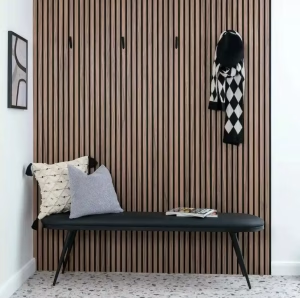
The prevailing trend toward modern minimalism favor hard, reflective surfaces: polished concrete, expansive glass, and natural stone. While these materials are aesthetically superior, they are acoustically volatile. Without intervention, these surfaces create a “harsh” environment where sound waves bounce indefinitely.
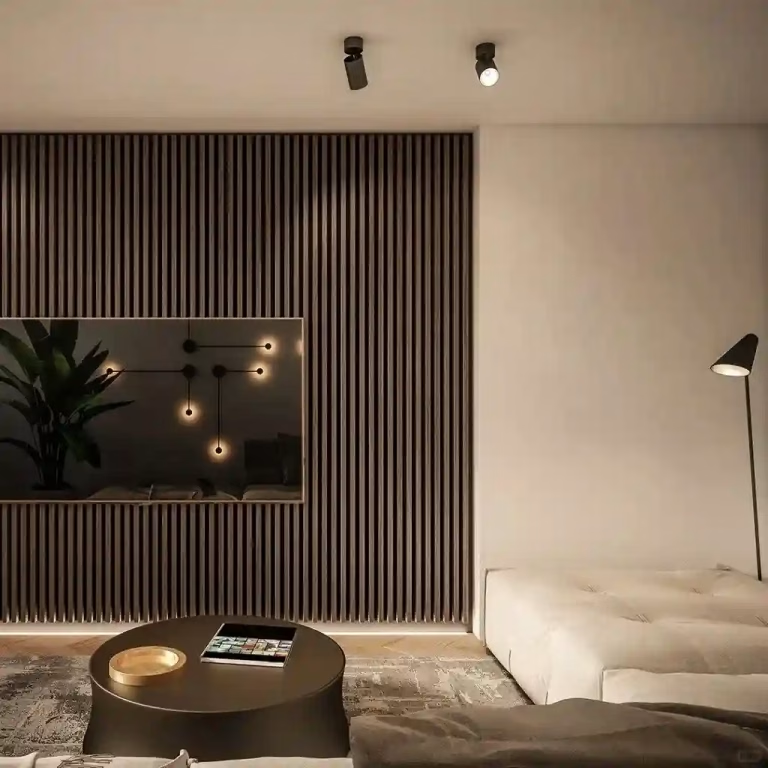
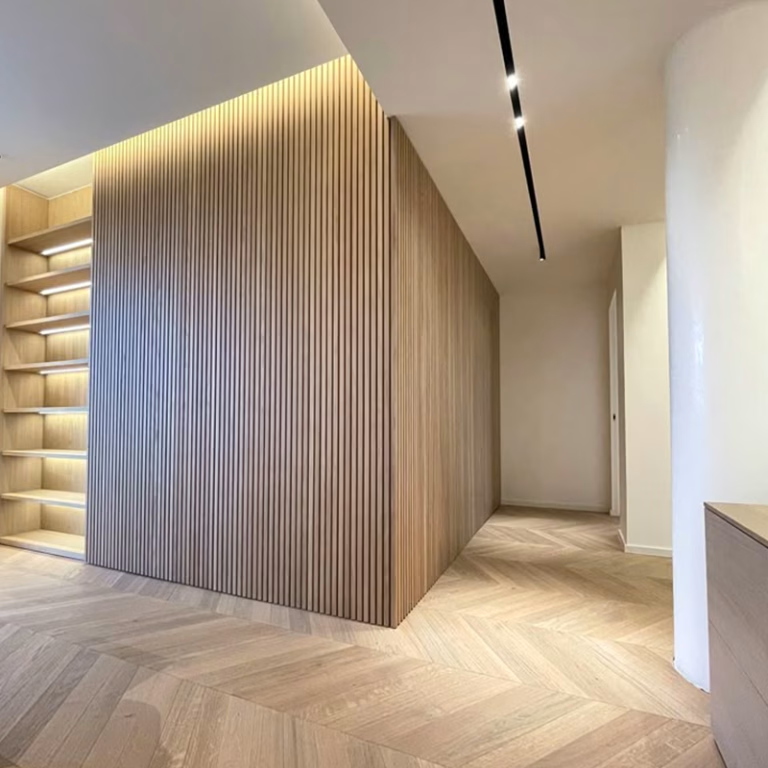
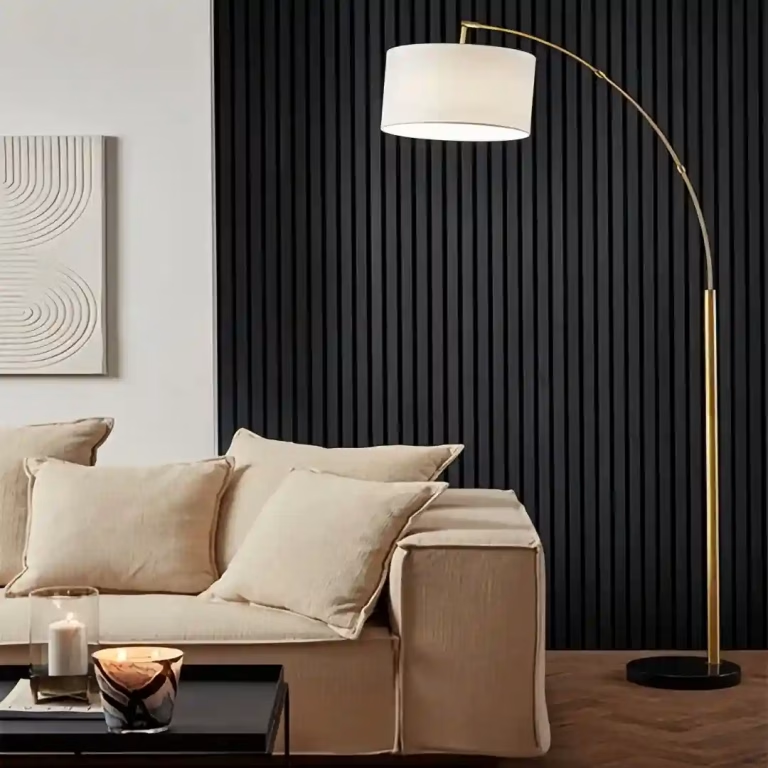
To mitigate this, Seninpanel has engineered a solution that bridges the gap between minimalist form and acoustic function. By integrating a series of precision-cut wood slats with a high-density, porous felt backing, these acoustic wall panels effectively capture and dissipate sound energy before it can reflect back into the room.
Engineering Serenity: The Mechanism of Absorption
The technical efficiency of Seninpanel’s solutions lies in their composite structure. The felt substrate, typically made from recycled PET, acts as a dissipative medium. When sound waves strike the panel, they are trapped within the porous fibers of the felt, converting kinetic sound energy into a negligible amount of thermal energy.
Furthermore, the vertical rhythm of the wood wall panels serves to diffuse sound. This prevents the formation of “standing waves” and “flutter echoes,” ensuring that the room remains “live” enough for natural communication while being “quiet” enough for professional focus. This dual-action performance makes them ideal as both office acoustic panels and acoustic ceiling panels.
Sustainability and Architectural Longevity
Modern B2B clients increasingly demand materials that align with environmental responsibility. Seninpanel prioritizes this by utilizing responsibly sourced veneers and recycled substrates. Beyond sustainability, the durability of these decorative acoustic panels ensures that they serve as a permanent architectural finish, reducing the need for future retrofitting or maintenance.
By addressing the invisible dimension of sound, architects can create spaces that aren’t just beautiful to look at, but are restorative to inhabit.
Analytical Q&A: Technical Implementation of Acoustic Panels
Q1: How does the thickness of the PET backing influence the NRC rating? A: Generally, a thicker PET substrate increases the capacity for low-frequency absorption. Seninpanel optimizes this thickness to ensure a high Noise Reduction Coefficient (NRC) across the most common frequency ranges of human speech.
Q2: Can wood slat panels be used to improve the acoustics of an existing T-Grid ceiling? A: Yes. Many acoustic ceiling panels are designed to be compatible with standard suspension systems, allowing for an easy transition from industrial-looking tiles to a more sophisticated wood-linear aesthetic.
Q3: Is there a significant acoustic difference between Oak and Walnut finishes? A: The acoustic performance is primarily driven by the felt backing and the spacing of the slats. The wood species choice is largely aesthetic, though the density of the wood does play a minor role in sound diffusion.
Q4: How do these panels handle the “mid-range” frequencies found in busy offices? A: Office acoustic panels are specifically tuned to target the 500Hz to 2000Hz range, which encompasses the majority of human vocal interaction, thereby significantly reducing “background buzz.”
Q5: What is the recommended cleaning protocol for the felt backing? A: The high-density PET felt used in Seninpanel products is naturally dust-resistant. For maintenance, a low-suction vacuum or compressed air is sufficient to remove any particulate matter from the recesses between the slats.