Products
Home > Products
Home / Products
Products.
Acoustic panels for wholesale supply and interior projects.
Need samples for your next project?
Tell us your product interest, quantity and destination.
Product Categories





Frequently Asked Questions
How do acoustic wall panels work?
Imagine shouting in an empty hall—your voice bounces off hard walls, creating echoes. Why? Hard surfaces like concrete, glass, or drywall reflect sound waves like mirrors reflect light. Acoustic panels fix this by breaking the "sound wave ping-pong": Cover hard surfaces → Like wrapping the room in a sponge jacket to block reflections. Porous materials absorb sound → Sound waves enter tiny pores, lose energy through friction, and convert to heat (60-95% efficiency). Result: Speech becomes clearer, background noise fades, and you no longer need to yell on Zoom calls. Quick Test to See If You Need Panels Do the clap test: Clap loudly in the room. Hear a lingering "boomy" echo? → Too much reverberation → Time to add panels.
There are so many acoustic wall panels, how do I choose?
Consider three key points: your room’s purpose (e.g., home studio, office), acoustic needs (echo control vs. noise reduction), and space layout (wall size, furniture placement). For most spaces—like studios, training rooms, or areas needing durability—our wood acoustic panels (stylish + high absorption) and PET fiber panels (splash-resistant + easy maintenance) are ideal solutions.
Where Should Acoustic Panels Be Placed?
A: Acoustic panels excel in high-traffic spaces like offices, restaurants, conference rooms, gyms, and performance venues – anywhere clear sound and noise control are critical. For optimal results:
1️⃣ Match Placement to Sound Sources
In home studios/theaters, position panels where speaker reflections hit walls (e.g., first reflection points) relative to seating areas.
For large rooms (classrooms, conference halls), distribute panels evenly across walls and ceilings to balance acoustics.
2️⃣ Adjust Height Based on Activity
Seated areas (meeting rooms): Mount panels at ear level (3–4 ft).
Standing spaces (concert venues): Place panels higher (6–8 ft), and add ceiling coverage for overhead sound control.
3️⃣ Balance Asymmetrical Spaces
Prioritize “acoustic symmetry” by focusing on primary listening zones (e.g., seating clusters). Achieve even coverage, even in irregular layouts.
Pro Tip: Combine wall and ceiling panels for 360° sound management in challenging spaces.
How Many Sound Absorbing Panels Do l Need?
A: The ideal number of panels depends on three core factors:
1️⃣ Material Quality & Thickness
- High-density panels (e.g., 4-inch mineral wool) absorb 2x more low-frequency noise than thin fabrics.
- Prioritize materials with NRC 0.8+ ratings for maximum efficiency.
2️⃣ Room Size & Purpose
- Small home studios: Start with 6–12 panels (15–25% wall/ceiling coverage).
- Large conference rooms/auditoriums: Aim for 30–40% coverage to combat echoes.
3️⃣ Problem Areas
- Place extra panels at reflection points (e.g., walls opposite speakers) and corners to target bass buildup.
Pro Tip: Use the “mirror test” – Sit in key listening spots, have a helper slide a mirror along walls. Where you see speakers reflected = critical panel placement zones.
Where Can I Buy Acoustic Wall Panels?
Acoustic wall panels are usually made to order.Senin panel is a manufacturer of acoustic materials specializing in the production of fabricated acoustic products, offering an extensive product catalog and unmatched sales expertise in sound control and noise management.
How Are soundproofing Panels installed?
Acoustic panels solve two distinct issues: sound absorption (reducing echo) vs. soundproofing (blocking noise). Clarify this difference first—panels optimize room acoustics, not structural isolation.
Installation Options
1️⃣ Permanent Fix
For theaters/studios: Use fabric panels with impaling clips + adhesive on solid walls (concrete/brick).
2️⃣ Removable Fix
For offices/lofts: Install with Roto-fasteners/Z-clips on drywall or ceiling grids.
Pro Tip: Test Noise Reduction Coefficient (NRC) via ASTM C423. Staggered layouts boost sound diffusion.
Are Acoustic Panels Worth it?
Crystal-clear audio isn’t just for audiophiles. Imagine streaming music on a high-end speaker, only to have it muddied by echoes or ambient chatter. Even top-tier audio gear falters in spaces overwhelmed by reverberation—proof that where you listen matters as much as how you listen.
Why Acoustic Panels Deliver Value
- Echo Elimination: They neutralize “sound bounce,” sharpening speech clarity for calls, podcasts, or virtual meetings.
- Ambient Noise Control: Dampens distractions like HVAC hum or street noise, enhancing focus in offices or studios.
- Budget Flexibility: Ranges from DIY options to premium acoustic-rated panels, adapting to personal or commercial needs.
Design Bonus: Modern panels double as decor—think bold geometric prints or neutral textures that blend with interiors.
Short Answer: A sound-optimized room transforms mediocre audio into immersive experiences. Yes, acoustic panels pay off by tackling both performance and practicality.
Will Acoustic Panels Keep sound Out?
A: Acoustic wall panels are not designed for soundproofing — they excel at controlling interior sound quality, not stopping external noise. Here’s the breakdown:
Noise Blocking ≠ Sound Absorption
Soundproofing (e.g., mass-loaded vinyl, insulation) uses density to block noise between rooms or buildings (measured by STC ratings).
Acoustic panels absorb reflections (measured by NRC ratings) to cut echoes, enhance speech clarity, and refine audio quality within a space.
Where Panels Shine:
Reduce reverberation in home theaters by 40-60% when covering 20-30% of walls/ceilings.
Sharpen podcast/meeting audio by targeting “first reflection points” between speakers and listeners.
Fix “muddy” bass in music studios using thick bass traps (6-inch+ panels) at room corners.
Critical Tip: For noisy neighbors or street sounds, combine solutions — use acoustic panels with soundproofing upgrades like weatherstripping doors/windows or adding resilient channels to walls.
What Fabrics Can Be Used To Wrap Acoustic Panels?
Poor acoustics can ruin even the finest audio setup, from muffled movie nights to distracting Zoom calls. While high-grade studio panels solve these issues, their fabric covers play a critical dual role: enhancing sound and aesthetics.
Top Fabric Choices & Why They Matter
- Polyester Blends – Budget-friendly, lightweight, and acoustically transparent. Ideal for home studios.
- Wool Felt – Natural fibers excel at trapping mid/high frequencies. Adds texture to modern offices.
- Guilford of Maine FR701 – Industry standard for commercial spaces. Combines Class A fire ratings with seamless customization.
Key Tip: Avoid thick weaves or vinyl—they block sound absorption. Test fabrics by holding them to a light; if you see minimal diffraction, airflow stays optimal.
Short Answer: Quality fabrics balance porousness, durability, and style. Prioritize materials labeled “acoustically transparent” for peak performance.
How do I place an order?
You can order through our website, email us for a quotation or give our customer service team a call and they can take care of further transaction details for you.
Please contact WhatsApp:,8615851060675
or Email:chenxu@senyinjs.com。
Application Scenarios for Akupanels
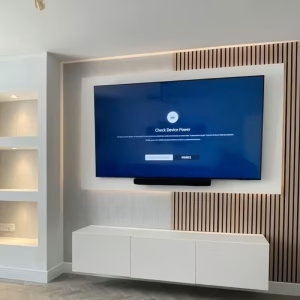
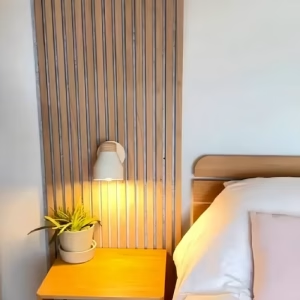
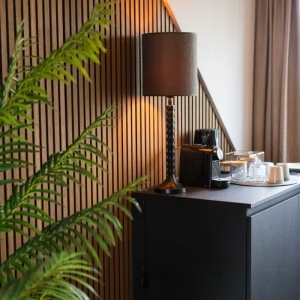
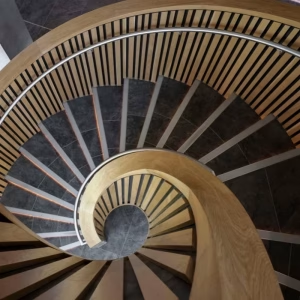
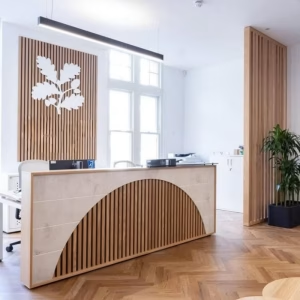
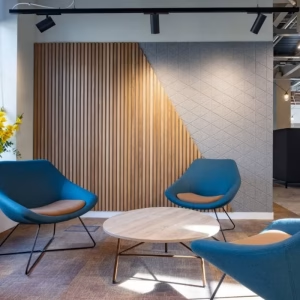
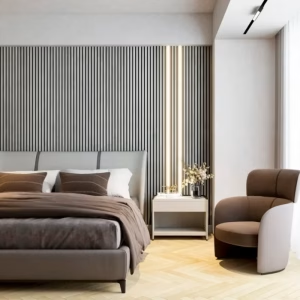
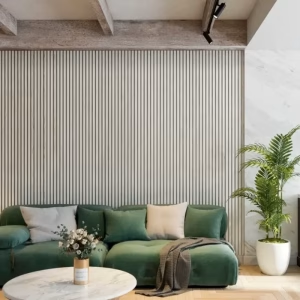
How architects and designers use PET polyester fiber and wood panels to solve noise challenges creatively: Offices: Wood slat ceilings that absorb chatter while adding organic texture Libraries: PET wave panels doubling as sound-absorbing art above study pods Living Rooms: Sleek fiber panels reducing TV/echo noise while serving as modern wall art Visual examples showcase how these materials blend acoustics and aesthetics seamlessly.