

The Science of Silence: Understanding Acoustic Ratings
Before selecting a specific style, it is crucial to understand the metrics that define performance. When evaluating Noise Reduction Panels, two primary ratings determine their effectiveness:
- Sound Transmission Class (STC): This measures a partition’s ability to block sound from passing through it. A higher STC indicates better blocking capabilities (e.g., stopping traffic noise).
- Noise Reduction Coefficient (NRC): This measures the amount of sound a material absorbs. An NRC of 1.0 indicates the material absorbs 100% of the sound that hits it.
For bedroom applications, a balance of both is often required, though Sound Absorbing Panels (high NRC) are typically used to treat internal echoes, while heavy mass barriers address STC.
Soundproofing vs. Sound Absorption: A Critical Distinction

- Soundproofing (Isolation): This involves preventing sound from entering or leaving a room. It usually requires mass, density, and decoupling structures (like resilient channels).
- Sound Absorption (Treatment): This focuses on improving the sound quality within the room by reducing reverberation and echo.
Decorative Acoustic Panels, such as those offered by Seninpanel, primarily function as absorption tools. They transform a “live,” echoey room into a “dead,” calm space, which is essential for sleep quality and privacy.
Top 5 Recommendations for Bedroom Acoustics in 2026
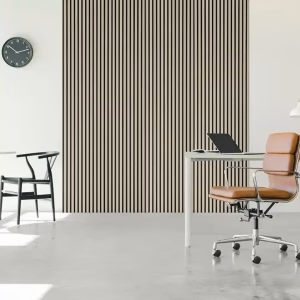
1. Modern Slat Wood Wall Panels
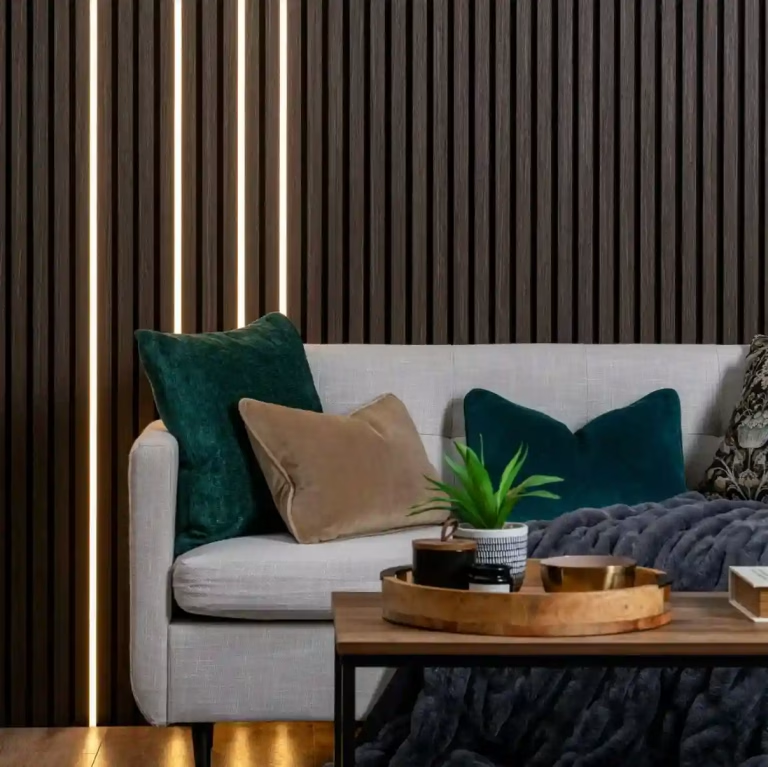
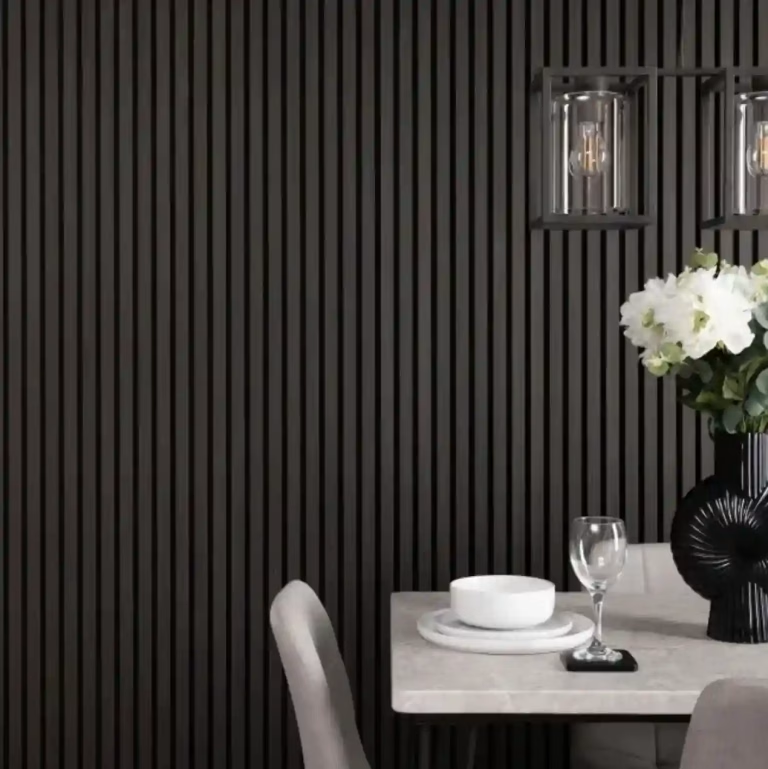
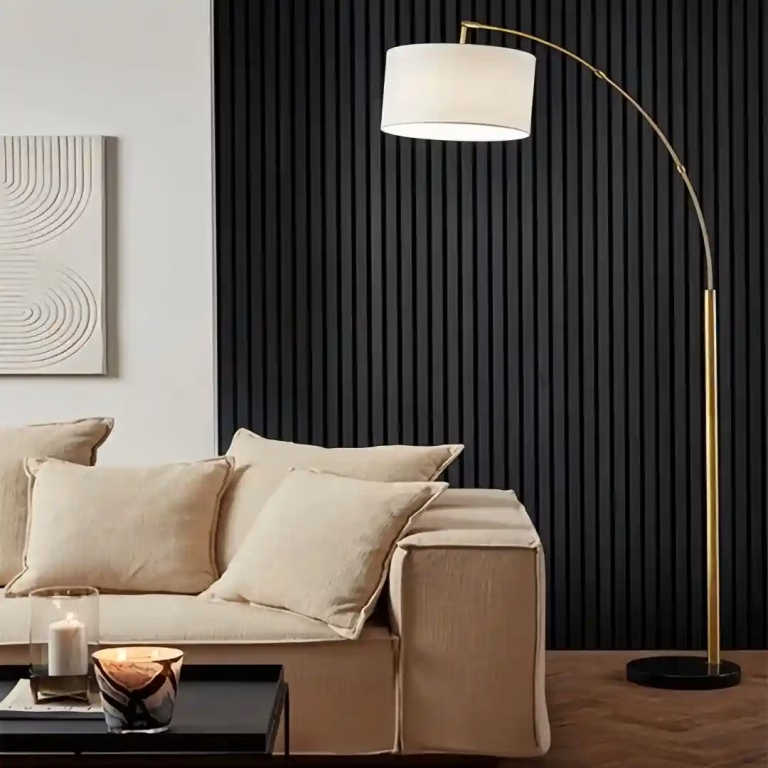
Wood Slat Panels are currently the dominant trend in modern interior design. These panels typically feature vertical timber slats mounted on a recycled PET felt backing.
- Aesthetic Appeal: They add texture and warmth, creating a focal point behind a bed.
- Acoustic Function: The spacing between the slats allows sound waves to penetrate the backing, where the felt absorbs the energy.
- Seninpanel Insight: Seninpanel offers variations in oak, walnut, and painted finishes, allowing for customization that matches specific design themes.
2. Fabric-Wrapped Acoustic Panels
For a more minimalist or corporate look, fabric-wrapped panels are highly effective. These are often used as Office Acoustic Panels but are excellent for bedrooms due to their high NRC ratings.
- Design: Available in various colors and shapes (hexagons, squares).
- Performance: Excellent absorption of mid-to-high frequency sounds (speech, TV noise).
3. 3D Textured Wood Wall Panels
Unlike flat slats, 3D geometric Wood Wall Panels offer depth. These panels use the physics of diffusion to scatter sound waves, reducing standing waves in a room.
- Best For: Larger master bedrooms where sound diffusion is needed alongside absorption.
- Visuals: Creates a sculptural look that doubles as art.
4. Perforated Wood Acoustic Panels
These panels feature micro-perforations that act as Helmholtz resonators. They are a staple in high-end Interior Acoustic Solutions.
- Function: They are tuned to absorb specific low-frequency sounds that slat panels might miss.
- Style: Sleek and uniform, suitable for contemporary luxury developments.
5. Hybrid Felt and Timber Panels
Combining the softness of acoustic felt with the rigidity of timber, these panels offer a dual-layer absorption system.
- Installation: Often lighter and easier to install than solid wood, making them ideal for retrofitting existing bedrooms without heavy construction.
📊 Comparative Analysis: Material vs. Application
| Panel Type | Primary Material | Best Application | Aesthetic Style |
|---|---|---|---|
| Slat Panels | Wood + Felt | Feature Walls, Headboards | Modern, Scandinavian |
| Fabric Panels | Fiberglass + Fabric | Ceilings, Upper Walls | Minimalist, Commercial |
| 3D Wood Panels | MDF/Solid Wood | Large Feature Walls | Artistic, Luxury |
| Perforated Panels | Plywood/Veneer | Home Theaters, Studios | Industrial, Sleek |
Frequently Asked Questions (FAQ)
Q1: Do acoustic wood panels actually block noise from neighbors?
A: Not entirely. Wood Acoustic Panels are primarily designed for sound absorption (reducing echo inside the room). To block neighbor noise (sound proofing), you typically need to add mass to the wall (like drywall or mass loaded vinyl) in conjunction with the panels. However, by reducing internal echo, the panels make external noise less distinct and annoying.
A: Not entirely. Wood Acoustic Panels are primarily designed for sound absorption (reducing echo inside the room). To block neighbor noise (sound proofing), you typically need to add mass to the wall (like drywall or mass loaded vinyl) in conjunction with the panels. However, by reducing internal echo, the panels make external noise less distinct and annoying.
Q2: Can I install slat wall panels myself?
A: Yes. Most modern Wood Slat Panels, including those from Seninpanel, are designed for DIY installation. They often come with adhesive backing or simple clip systems that require basic tools, making them a cost-effective renovation choice.
A: Yes. Most modern Wood Slat Panels, including those from Seninpanel, are designed for DIY installation. They often come with adhesive backing or simple clip systems that require basic tools, making them a cost-effective renovation choice.
Q3: What is the difference between PET felt panels and wood panels?A: PET felt is a synthetic material made from recycled plastic bottles; it is soft, flexible, and excellent at absorbing high frequencies. Wood panels are rigid and durable. Combining them (wood slats on felt backing) offers the durability of wood with the absorption properties of felt.
Q4: Are these panels fire-resistant?
A: High-quality B2B suppliers ensure their Acoustic Wall Panels meet fire safety standards (such as Class A or Class B fire ratings). Always verify the specific fire rating with the manufacturer, especially for commercial projects.
A: High-quality B2B suppliers ensure their Acoustic Wall Panels meet fire safety standards (such as Class A or Class B fire ratings). Always verify the specific fire rating with the manufacturer, especially for commercial projects.
Q5: Can acoustic panels be used on ceilings?
A: Absolutely. Acoustic Ceiling Panels are highly effective because sound reflects off hard surfaces. Treating the ceiling (the “fifth wall”) is often the most efficient way to reduce reverberation time in a room without cluttering the walls.
A: Absolutely. Acoustic Ceiling Panels are highly effective because sound reflects off hard surfaces. Treating the ceiling (the “fifth wall”) is often the most efficient way to reduce reverberation time in a room without cluttering the walls.