



Enhancing Workplace Performance: The Critical Role of Office Acoustics in Modern Work Environments
Category
Wood acoustic panels
Discover how strategic acoustic design enhances workplace productivity and employee wellbeing. Learn effective office soundproofing solutions for modern work environments with Seninpanel.
In today’s dynamic work landscape, the relationship between acoustic environments and human performance has become increasingly evident. Research consistently demonstrates that uncontrolled noise levels can reduce productivity by up to 66%, with employees requiring an average of 23 minutes to regain deep focus after acoustic interruptions. The psychological impact extends beyond mere distraction—chronic exposure to poor acoustic conditions elevates cortisol levels, contributing to workplace stress and diminished cognitive function.
Modern organizations face a paradoxical challenge: while collaborative spaces foster innovation, they simultaneously create acoustic chaos. The World Health Organization identifies noise pollution as the second-largest environmental health risk in Europe, with workplace implications that extend far beyond comfort. Organizations investing in strategic acoustic management report 15-20% improvements in employee satisfaction metrics and significant reductions in sick leave related to stress-induced conditions.
Table of Contents
Addressing Acoustic Challenges in Contemporary Office Designs
The Open-Plan Dilemma
Open-plan offices, while economically efficient and visually appealing, present unique acoustic complexities. The absence of physical barriers allows sound to travel unimpeded, creating environments where speech intelligibility becomes compromised and concentration suffers. Studies reveal that employees in poorly designed open offices experience 30% more interruptions than their counterparts in acoustically optimized spaces, directly impacting project completion rates and quality of work.
The solution lies not in abandoning collaborative designs but in implementing intelligent acoustic zoning. This approach recognizes that different work activities require distinct acoustic environments—quiet focus areas demand different treatment than collaborative hubs or social spaces. The key is creating acoustic boundaries without sacrificing visual connectivity or spatial flow.
Material Science and Acoustic Performance
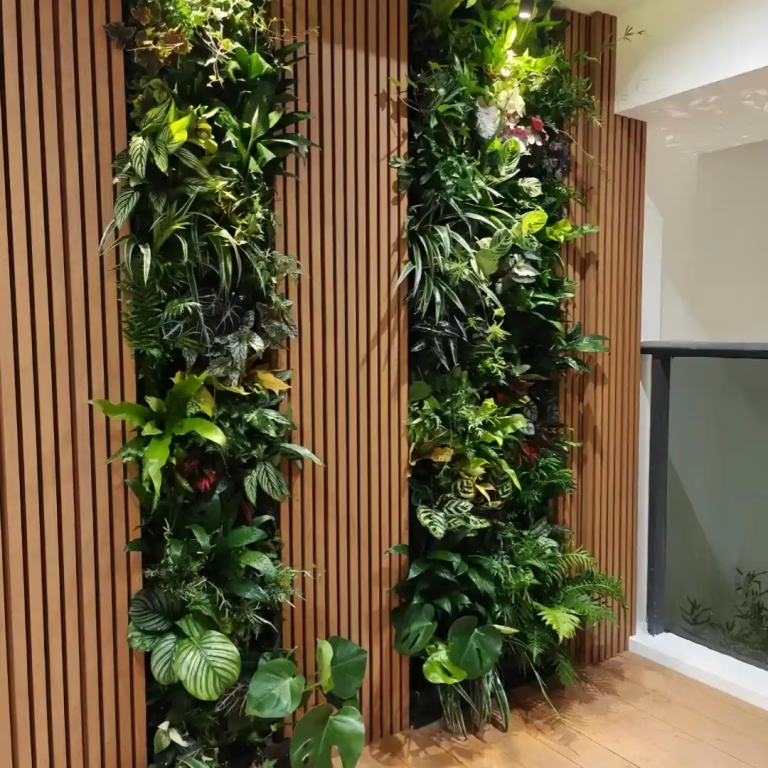
Contemporary acoustic solutions leverage advanced material technologies that balance aesthetic appeal with functional performance. High-performance acoustic panels now incorporate recycled materials, sustainable manufacturing processes, and modular designs that adapt to evolving workspace requirements. The integration of biophilic design principles with acoustic functionality creates environments that address both psychological well-being and physical comfort.
Strategic Implementation of Acoustic Solutions for Optimal Results
Comprehensive Acoustic Assessment
Effective acoustic improvement begins with thorough environmental analysis. Professional acoustic consultants employ sophisticated measurement tools to identify specific problem frequencies, reverberation times, and noise transmission paths. This data-driven approach ensures that solutions address actual problems rather than perceived issues, maximizing return on investment while minimizing disruption to ongoing operations.
Integrated Acoustic Systems
Modern workplace acoustic strategies employ layered approaches:
- Ceiling-mounted solutions: Acoustic baffles and clouds address vertical sound reflection, particularly effective in spaces with high ceilings
- Wall-integrated systems: Strategic placement of absorptive panels at reflection points reduces overall noise levels
- Furniture-integrated acoustics: Desks, partitions, and seating with built-in sound absorption create personal acoustic zones
- Floor treatments: Carpeting and underlays address impact noise while contributing to overall acoustic comfort
Seninpanel’s research and development team has pioneered modular acoustic systems that combine aesthetic versatility with measurable performance improvements. Their solutions address the full spectrum of workplace acoustic challenges while maintaining architectural integrity and design coherence.
Future-Proofing Workspaces with Adaptive Acoustic Technologies
The post-pandemic workplace demands unprecedented flexibility. Hybrid work models, hot-desking arrangements, and rapidly reconfigurable spaces require acoustic solutions that adapt as quickly as business needs evolve. Modular acoustic panels, mobile sound barriers, and reconfigurable partition systems enable organizations to transform spaces without structural modifications or significant capital investment.
Sustainability considerations increasingly influence acoustic material selection. Organizations seeking LEED certification or BREEAM compliance prioritize acoustic solutions that contribute to environmental goals while enhancing occupant experience. Seninpanel’s commitment to sustainable manufacturing processes and end-of-life recyclability aligns with corporate sustainability objectives while delivering exceptional acoustic performance.
Partnering with Acoustic Specialists for Comprehensive Solutions
The complexity of modern workplace acoustics demands specialized expertise. Professional acoustic consultants bring scientific understanding of sound behavior, material performance characteristics, and regulatory compliance requirements to every project. Their ability to translate technical specifications into practical, cost-effective solutions ensures that acoustic investments deliver measurable business outcomes.
Organizations that view acoustic optimization as a strategic investment rather than a facility management expense consistently report superior returns. Improved concentration leads to faster project completion, reduced error rates, and enhanced creative output. Employee retention improves as workplace satisfaction increases, while recruitment becomes more effective when prospective employees experience thoughtfully designed acoustic environments.