


Understanding Room Acoustics and Space Design
The foundation of any great studio lies in its physical dimensions and layout. Parallel walls are notorious for creating standing waves and flutter echoes, which distort frequency response. When planning a space, avoiding perfect cubic dimensions is highly recommended to prevent problematic resonances.
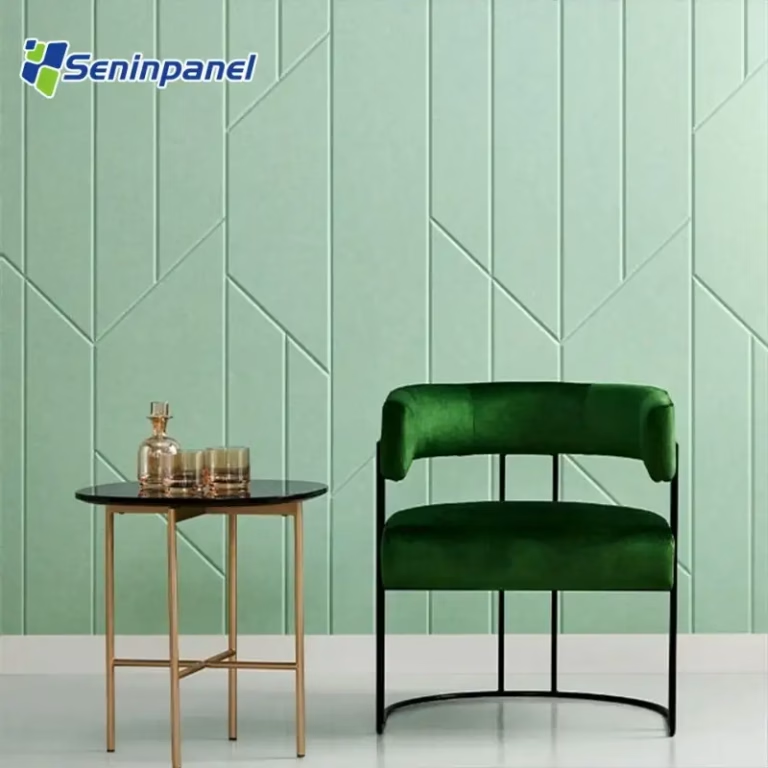
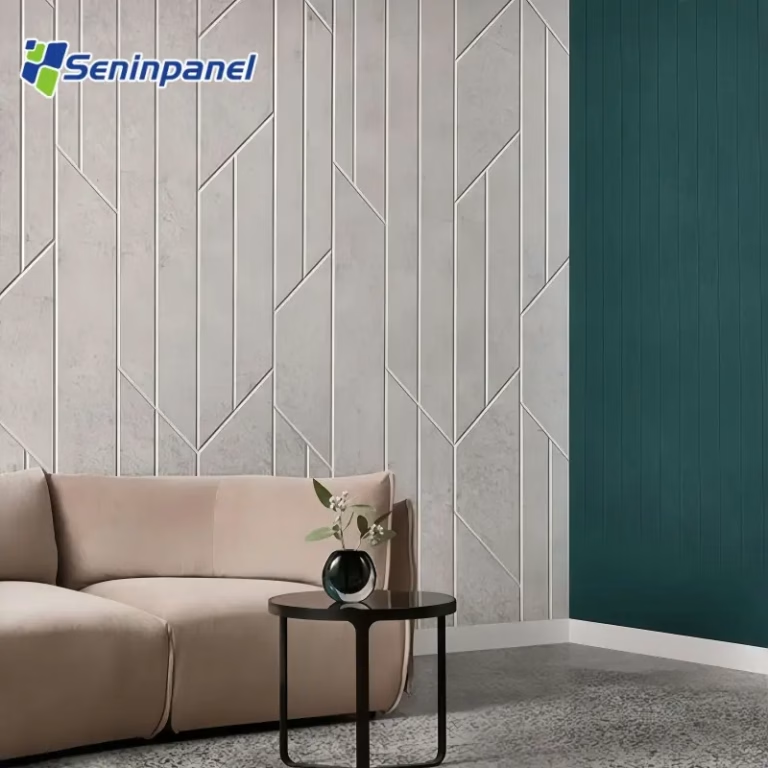
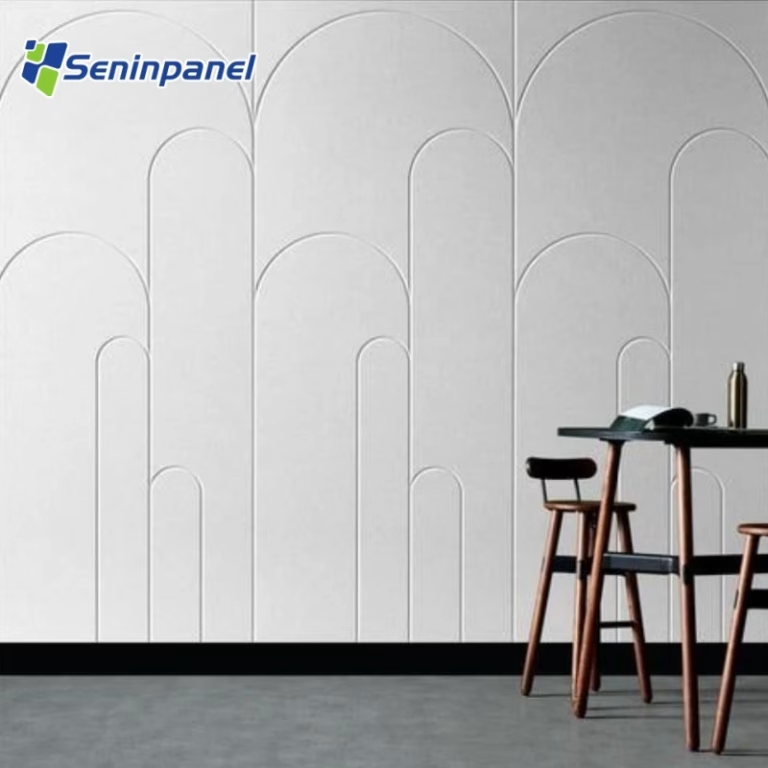
Once the architecture is set, treating the surfaces becomes the next priority. Acoustic wall panels are essential for managing mid and high-frequency reflections. Unlike traditional foam, polyester fiber acoustic panels offer superior density and aesthetic versatility. Seninpanel has engineered its polyester acoustic panels to provide consistent sound absorption while seamlessly blending into modern studio designs, acting as both functional noise reduction panels and decorative acoustic panels.
Sound Isolation vs. Acoustic Treatment
A common misconception is confusing sound isolation with acoustic treatment. Sound isolation (using heavy mass, decoupling, and sealing gaps) prevents sound from entering or leaving the room. Acoustic treatment, on the other hand, improves how sound behaves inside the room.
While heavy wood wall paneling or dense drywall contributes to isolation, lightweight sound absorbing panels are strictly for interior acoustic control. For a comprehensive setup, it is crucial to address both. Once the room is isolated, applying acoustic panels ensures that the internal reflections do not muddy your studio monitor placement and acoustics.
Strategic Placement and Treatment Solutions
Proper placement of treatments is just as important as the materials themselves. The first reflection points on side walls, ceilings, and floors should be treated to prevent comb filtering. Seninpanel acoustic panels are highly effective here, as their polyester acoustic panels can be easily customized in size and shape to fit specific reflection zones.
Low-frequency management is another critical aspect. While standard soundproof panels handle higher frequencies, bass buildup requires dedicated bass traps in room corners. However, for general room balancing, utilizing office acoustic panels or specialized studio treatments ensures an even decay rate across the frequency spectrum. If you are wondering how to install acoustic panels in home theater or studio setups, most PET acoustic panels are designed for straightforward DIY mounting using adhesives or mechanical clips.
The Role of Sustainable Materials in Studio Design
Modern studio design increasingly prioritizes sustainability without compromising performance. Seninpanel leads in this area by utilizing recycled PET materials. These polyester fiber acoustic panels are not only eco-friendly but also highly durable, moisture-resistant, and safe for indoor environments. When searching for the best acoustic panels for recording studio applications, considering the lifecycle and safety of the material is just as important as its acoustic coefficient.
Frequently Asked Questions About Studio Acoustics
What is the difference between soundproof panels and acoustic panels?
Soundproof panels are dense and heavy, designed to block sound transmission between rooms. Acoustic panels, like those made from polyester fiber, are porous and designed to absorb reflections and improve sound quality within the room.
Soundproof panels are dense and heavy, designed to block sound transmission between rooms. Acoustic panels, like those made from polyester fiber, are porous and designed to absorb reflections and improve sound quality within the room.
Can I use decorative acoustic panels in a professional recording studio?
Absolutely. Decorative acoustic panels, such as those from Seninpanel, are specifically designed to merge aesthetics with high-performance acoustic treatment, making them ideal for professional studios that require both visual appeal and sonic accuracy.
Absolutely. Decorative acoustic panels, such as those from Seninpanel, are specifically designed to merge aesthetics with high-performance acoustic treatment, making them ideal for professional studios that require both visual appeal and sonic accuracy.
How do I know where to place acoustic wall panels?
Identify the first reflection points by using the mirror trick along your side walls, ceiling, and floor. Additionally, treating the rear wall and front wall behind the monitors helps manage overall room reverberation.
Identify the first reflection points by using the mirror trick along your side walls, ceiling, and floor. Additionally, treating the rear wall and front wall behind the monitors helps manage overall room reverberation.
Are PET acoustic panels effective for bass control?
PET acoustic panels excel at absorbing mid and high frequencies. For low-frequency bass control, you should combine them with dedicated bass traps in the room’s corners, as bass requires significantly more mass and depth to absorb.
PET acoustic panels excel at absorbing mid and high frequencies. For low-frequency bass control, you should combine them with dedicated bass traps in the room’s corners, as bass requires significantly more mass and depth to absorb.
Is it difficult to figure out how to install acoustic panels in home theater setups?
Not at all. Acoustic panel installation tips usually involve using acoustic adhesive or Z-clips. Seninpanel polyester acoustic panels are lightweight and easy to cut, making them highly accessible for DIY home theater and studio projects.
Not at all. Acoustic panel installation tips usually involve using acoustic adhesive or Z-clips. Seninpanel polyester acoustic panels are lightweight and easy to cut, making them highly accessible for DIY home theater and studio projects.
Elevating Your Studio Experience
Crafting an acoustically optimized music studio is an art that demands attention to detail. By meticulously designing your studio space, understanding the difference between isolation and treatment, and utilizing premium sound absorbing panels, you can create an environment that fosters creativity. Seninpanel provides the perfect intersection of acoustic science and sustainable design, offering the tools necessary to bring your ultimate audio space to life.