


How PET Acoustic Panels Create Clearer, More Flexible Learning Environments
Category
Wood acoustic panels
Explore how PET acoustic panels improve speech clarity, reduce classroom echo, and support flexible, comfortable learning spaces in schools and homes.
Learning spaces are expected to do more than ever. A classroom may host a lecture, group work, and an online session on the same day. Libraries include collaborative zones, while homes often double as study rooms. When hard surfaces repeatedly reflect sound, even a well-designed space can become tiring to use.
Good acoustics are not about making a room silent. They are about helping useful sound—especially speech—reach listeners clearly while controlling distracting reflections. This is where Acoustic Panels, thoughtful layouts, and appropriate building assemblies work together.
Table of Contents
Why Classroom Acoustics Affect Everyday Learning
Reverberation is the persistence of sound after the source has stopped. Too much of it blurs consonants, makes instructions harder to follow, and encourages people to raise their voices. The effect can be especially noticeable for younger learners and people with hearing or attention difficulties.
Classroom guidance illustrates why background sound and reverberation should be assessed using the room’s actual conditions. Confirm the applicable criteria and measurement basis for the specific teaching space; professional classroom-acoustics guidance is a useful starting resource rather than a product guarantee. See ASHA classroom assessment resources for the underlying guidance.
Sound Absorption and Soundproofing Are Not the Same
This distinction matters when comparing product descriptions. Sound Absorbing Panels reduce echo inside a room by converting part of the sound energy into a very small amount of heat within a porous material. Soundproof Panels and complete wall or ceiling systems aim to limit sound transmission between spaces.
Therefore, adding Acoustic Wall Panels can improve speech clarity in a reflective classroom, but it may not stop music from traveling through a lightweight partition. If noise is entering through doors, glazing, ventilation paths, or wall gaps, the solution may also require sealing, added mass, isolation, or upgraded construction. Products marketed as Soundproof Wall Panels should be checked carefully: an NRC value describes absorption, not the sound-isolation performance of an entire wall.
Why PET Panels Fit Modern Education Spaces
PET Acoustic Panels, also called Polyester Acoustic Panels or Polyester Fiber Acoustic Panels, use a porous fiber structure to absorb reflected sound, particularly across speech-related mid and high frequencies. Their relatively light weight makes them suitable for walls, ceilings, suspended features, partitions, and retrofit projects.
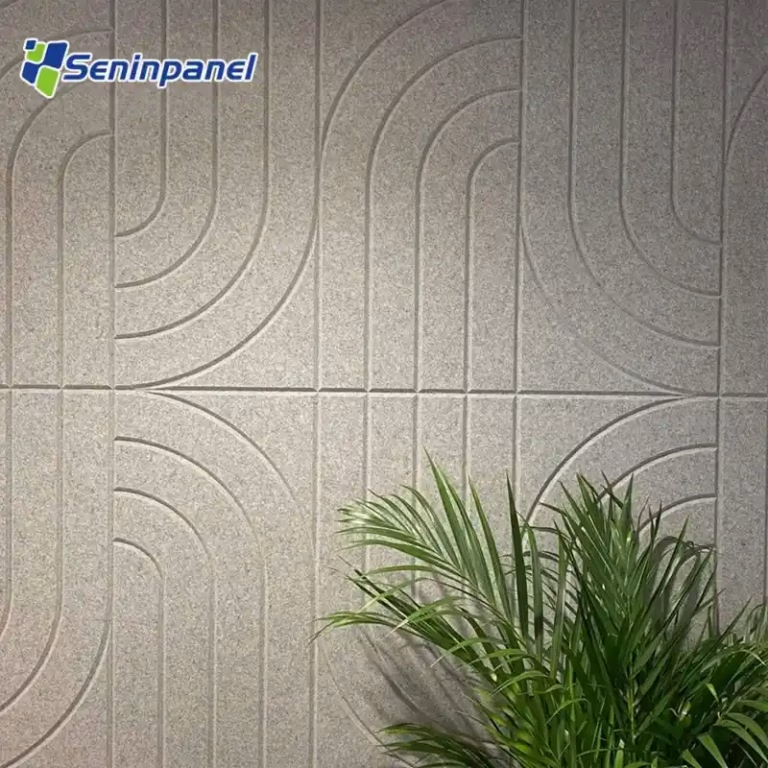
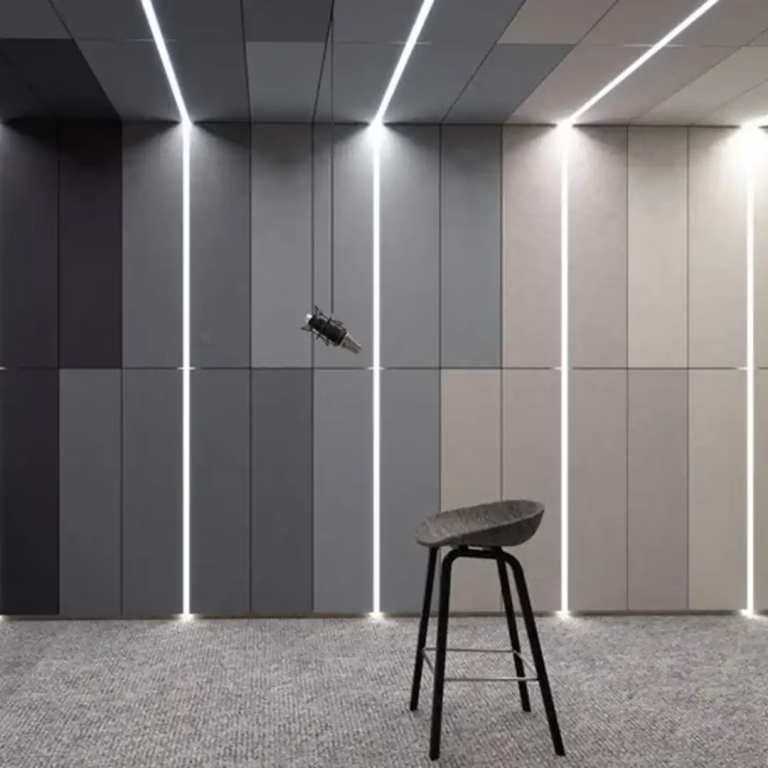
They also offer design flexibility. Color blocks can define activity zones, while cut shapes can support wayfinding. In a library or study area, Decorative Acoustic Panels can soften the visual atmosphere without making the interior feel like a recording studio.
Seninpanel approaches this category as both an acoustic material and an interior finish. Its published range includes multiple thicknesses, custom dimensions, more than 40 colors, and options tested to standards such as ISO 354, ASTM C423, ASTM E84, and EN 13501-1. Specifiers can compare mounting methods, fire classifications, recycled content, and test documentation for the intended project. Source: Seninpanel product specifications.
Match the Treatment to the Learning Activity
Classrooms and Training Rooms
Place Noise Reduction Panels where early reflections are strongest, usually across selected wall and ceiling areas rather than in one decorative cluster. Distribution matters because one untreated end of the room can remain noticeably lively.
Libraries and Open Study Areas
Use ceiling baffles, wall panels, and acoustic dividers to separate quiet work from conversation. The goal is not total isolation, but a gradual change in acoustic character between zones.
Lecture Halls, Music Rooms, and Multipurpose Spaces
Large rooms need a frequency-aware plan. Thicker absorbers, air gaps, ceiling treatments, and specialist calculations may be necessary. Music spaces also need useful reflection, so covering every surface can sound unnaturally dry.
Home Study Rooms and Education Offices
For a compact home office, start with reflection points near the desk and video-call position. Office Acoustic Panels can reduce flutter echo and improve microphone clarity. Where a warmer architectural look is preferred, PET backing can be combined with wood wall paneling or slatted finishes, balancing texture with absorption.
A Better Selection Process
Before choosing a pattern, identify the problem: room echo, noise transfer, mechanical noise, or several issues at once. Review room volume, finishes, occupancy, cleaning needs, impact risk, and local fire requirements. Ask for test reports tied to the proposed thickness and mounting condition; performance changes with air gaps and backing layers.
A pilot installation is sensible for repeated classrooms. Compare conditions before and after, gather user feedback, and refine placement before scaling across a campus.
Frequently Asked Questions
Do acoustic panels make a classroom soundproof?
No. They mainly control reflections inside the room. Reducing sound transfer requires a complete construction strategy involving walls, doors, glazing, seals, and ventilation paths.
How many acoustic panels does a classroom need?
There is no universal number. Room size, ceiling height, existing finishes, panel performance, and the target reverberation time all influence coverage.
Are thicker polyester panels always better?
Not automatically. Thickness and an air gap can improve absorption at lower frequencies, but placement, density, mounting, and the room’s needs remain important.
Can PET acoustic panels be installed as a DIY project?
Small residential panels may be DIY-friendly, but schools and commercial buildings should verify substrate suitability, fixing safety, fire requirements, and access for maintenance.
How do I install acoustic panels in a home theater?
Begin with the first-reflection areas on the side walls and ceiling, then assess the rear wall and low-frequency behavior. A balanced plan usually combines absorption with speaker placement and, when needed, bass treatment.
Can decorative panels replace wood wall paneling?
They can provide a softer, colorful alternative, or the two materials can be combined. Slatted wood over an acoustic PET layer is useful when both visual rhythm and sound absorption are priorities.
Conclusion
Effective educational acoustics begins with diagnosis, not decoration. When absorption, isolation, layout, and safety are considered together, learning spaces become easier to hear in and more adaptable to different activities. PET solutions from brands such as Seninpanel can play a practical role, provided that selection is based on verified data, appropriate installation, and the real acoustic needs of the room.