Turn a Custom 3D Acoustic Wall Panel Concept into a Clear Brief
Custom 3D acoustic wall panels need more than a reference image. A practical brief identifies the interior location, profile, module dimensions, colour, mounting method and evidence required for the project. Confirm what can be produced and approved before finalising the wall design.
The model and colour illustrations below are starting points for discussion. Availability, custom dimensions, minimum quantities and lead times should be confirmed for the selected option.
Choose the Profile and Module
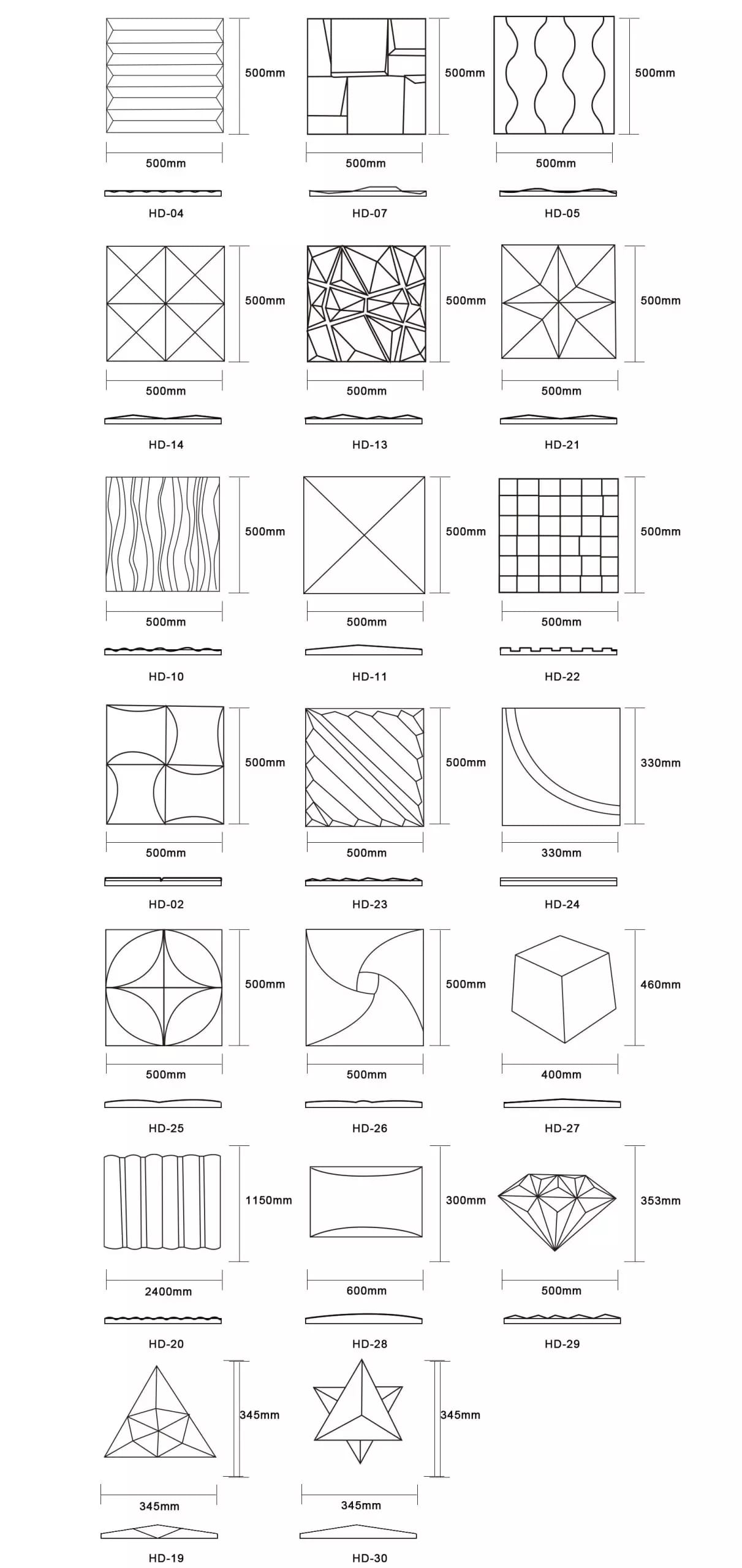
Provide an elevation and, where depth matters, a section drawing. Specify face dimensions, material thickness and the maximum projection from the wall separately. Show the intended orientation and how modules meet at corners, doors and exposed edges.
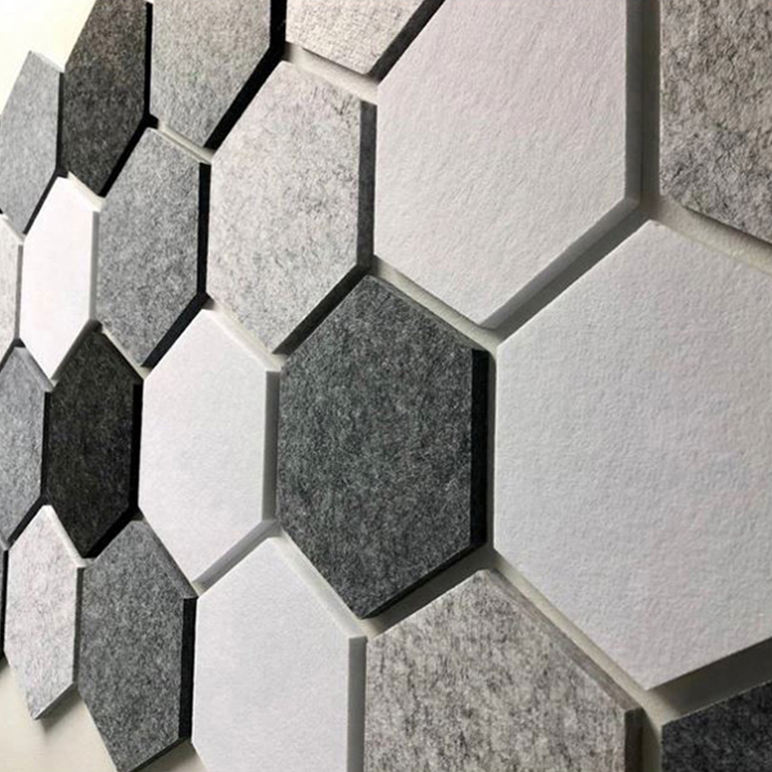
Review a small group of adjacent samples under the intended lighting. A single tile may not reveal how the repeat, shadows and joints will look across a complete wall. Our PET 3D panel specification guide covers these coordination checks in more detail.
Approve the Material and Colour
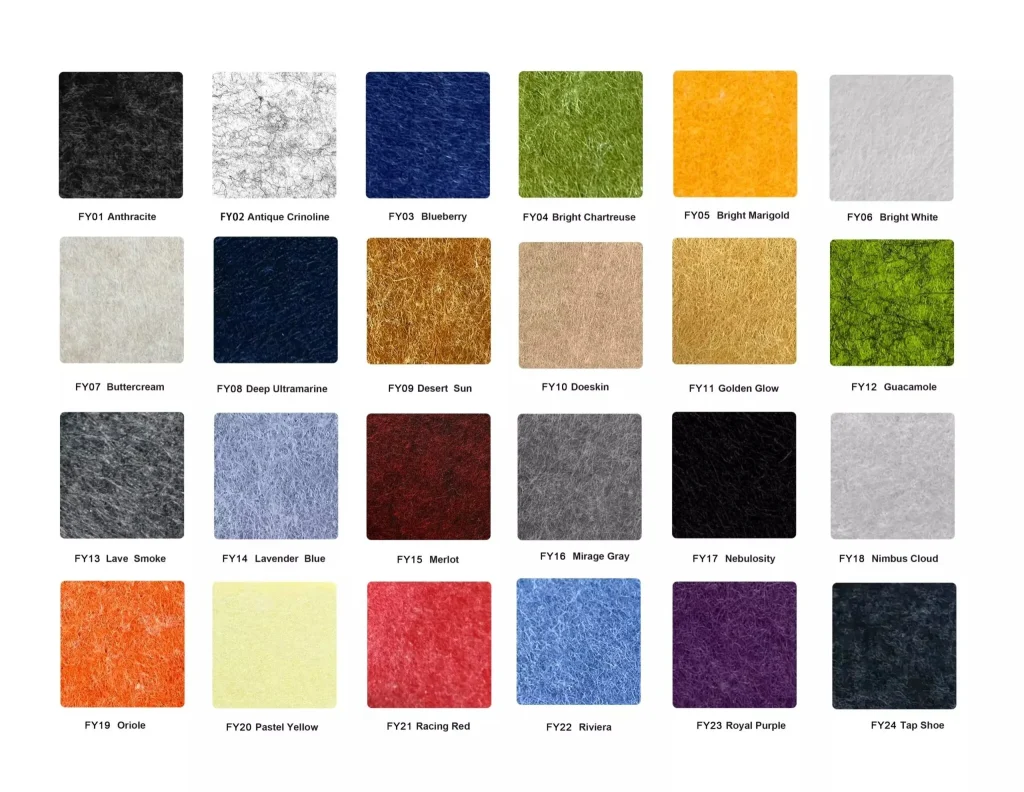
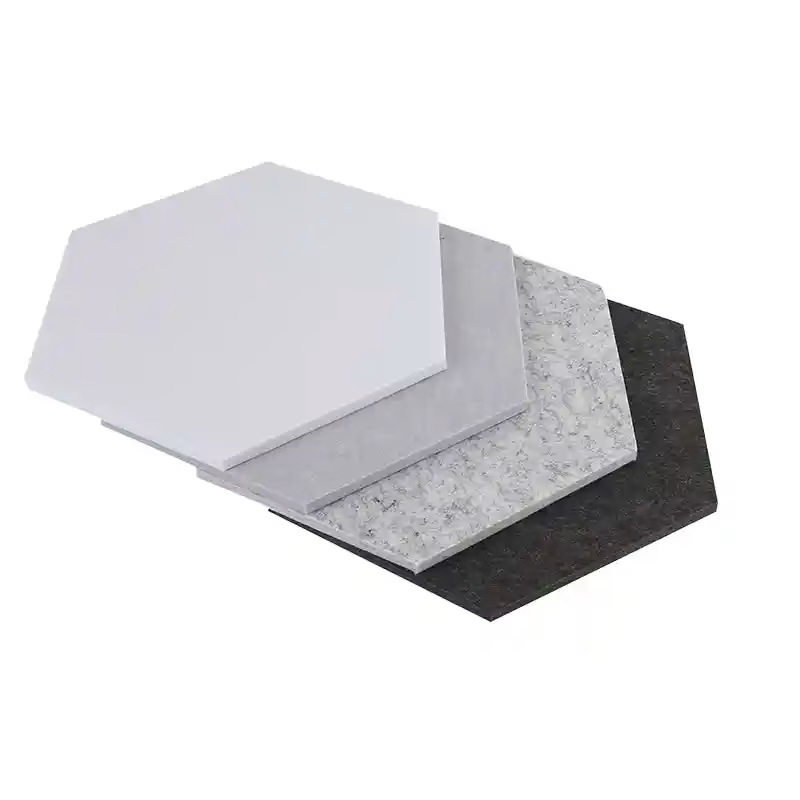
Use physical samples for colour approval rather than relying on a screen. Confirm the material type, finish and any backing or coating. If the concept combines several colours, provide a labelled layout and quantities for each colour.
Do not treat different materials pictured in a design gallery as interchangeable. A similar-looking wood wool, felt or other decorative panel may require different fixings, care and performance documents. Identify the exact material in the quotation and sample record.
Set the Application Limits
Confirm whether the selected product is intended for the proposed indoor conditions. Do not assume an interior acoustic panel is suitable for rain, prolonged humidity, wet cleaning or outdoor exposure. Kitchens, splash zones and furniture applications may impose additional requirements.
A decorative panel is not a repair for a damp or unstable wall. Address substrate defects first and confirm the fixing system with the installer. Ceiling use, moving doors and load-bearing applications also need a specifically suitable system rather than an adaptation based only on appearance.
Ask for Specific Environmental Evidence
Replace a broad request for an eco-friendly product with the information your project actually needs. Examples include material composition, verified recycled content, relevant emissions documentation and an environmental product declaration where available.
Check which product, factory or product family a document covers and whether it is current. An environmental declaration provides information for assessment; it should not be presented as proof of every environmental or health claim. Recyclability also depends on the finished construction and available collection routes.
Confirm Acoustic and Fire Documentation
Request reports for the selected product and installation. Check whether the tested thickness, profile, backing and mounting arrangement match the proposal. A custom change may require a separate review of whether existing evidence remains applicable.
Sound absorption is different from sound isolation between rooms. Use our guide to acoustic test data to frame the performance questions, then confirm project requirements with the responsible designer.
Use an Approval Schedule
| Stage | Approval to record |
|---|---|
| Concept review | Application, appearance, approximate quantities and constraints. |
| Technical review | Material, dimensions, mounting and required evidence. |
| Sample review | Colour, texture, profile and joint appearance. |
| Order confirmation | Approved drawing revision, quantity, packing, destination and programme. |
| Handover | Care instructions, spare identification and installation records. |
Agree responsibility for each approval before production. Changes to the profile, colour or artwork after sign-off can affect cost and timing, so record the final revision clearly.
Questions About Custom Orders
Can any shape or colour be made?
Feasibility depends on the material, dimensions, process and quantity. Submit drawings and sample requirements for confirmation rather than assuming unlimited customisation.
Can a standard test report be used for a custom panel?
Only when its scope is applicable to the proposed product and assembly. Ask for a documented review if the custom design differs from the tested configuration.
Compare the PET acoustic panel range and send your design brief and sample requirements for a project-specific quotation.