

Polyester Fiber Acoustic Panels: Materials and Applications
Category
PET Acoustic Panels
Compare polyester fiber acoustic panels for interior walls and approved ceiling applications. Review PET material options, mounting conditions and product-specific documentation before ordering.
Understand polyester fiber acoustic panels as a material and a finished construction. Compare PET felt formats, surfaces, backing and mounting, then check which acoustic, fire and environmental documents apply to the exact product. Use the linked selection guide when you are ready to define a project order.
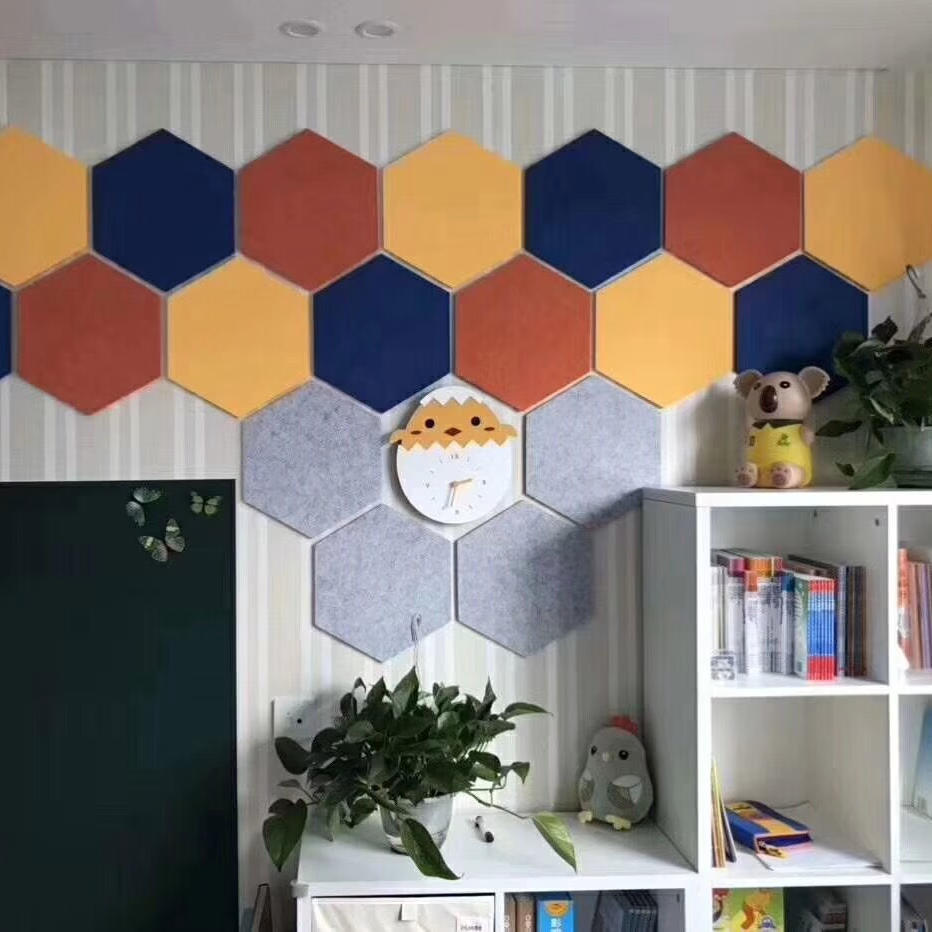
Table of Contents
What are polyester fiber acoustic panels?
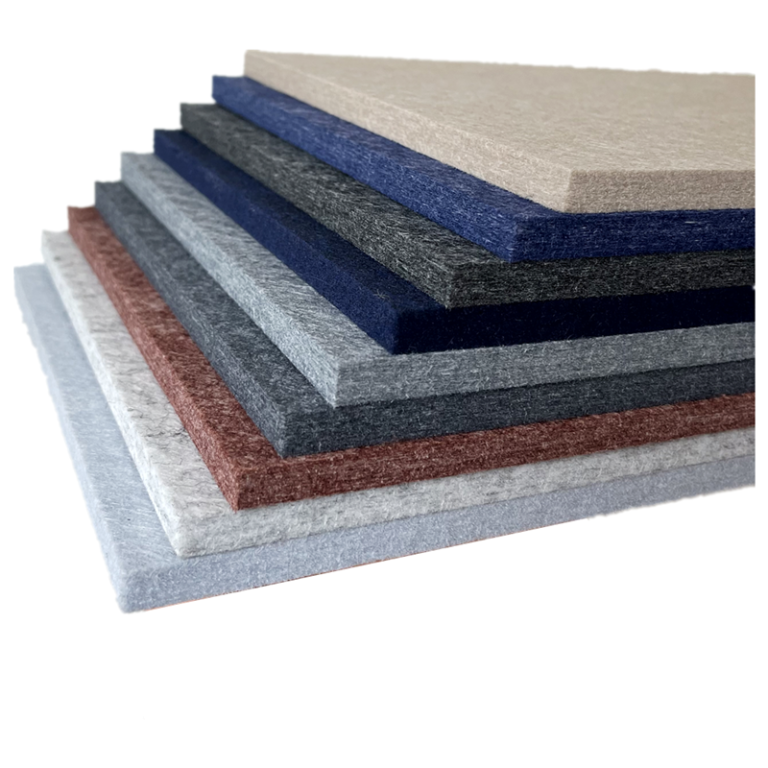
Polyester fiber acoustic panels are porous interior finishes used to absorb reflected sound. PET means polyethylene terephthalate, a type of polyester. Buyers may see the same material described as PET felt, polyester acoustic board or polyester fiber sound-absorbing board, but those names do not specify one construction or one performance level.
Identify the finished product: its fiber composition, thickness, face treatment, backing and mounting. A flat felt sheet, a formed 3D tile and a suspended baffle can share a material description while requiring different drawings, fixings and acoustic data. This guide explains those material differences; use the PET acoustic panel selection guide for the room-by-room purchasing decision.
Separate the material from the finished panel system
| Material or system detail | What to establish | What it does not establish |
|---|---|---|
| Polyester or PET fiber | Product reference and declared composition | A universal recycled-content percentage or fire classification |
| Thickness and density | The selected board and tolerances | A guaranteed acoustic result for every mounting |
| Face, print or coating | The finished surface covered by the sample and documents | That an uncoated board report covers a modified face |
| Backing and cavity | The full section, including any frame or air space | That a cavity-backed result applies to direct fixing |
| Cut or formed geometry | Overall dimensions, projection and fixing detail | Overhead suitability or a suspension design |
Where polyester panels fit in a room
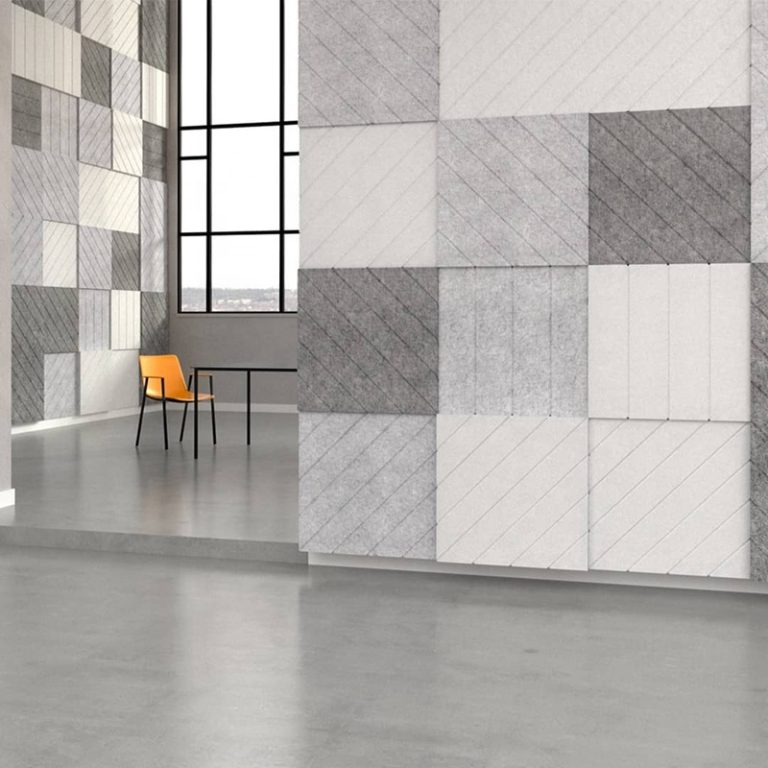
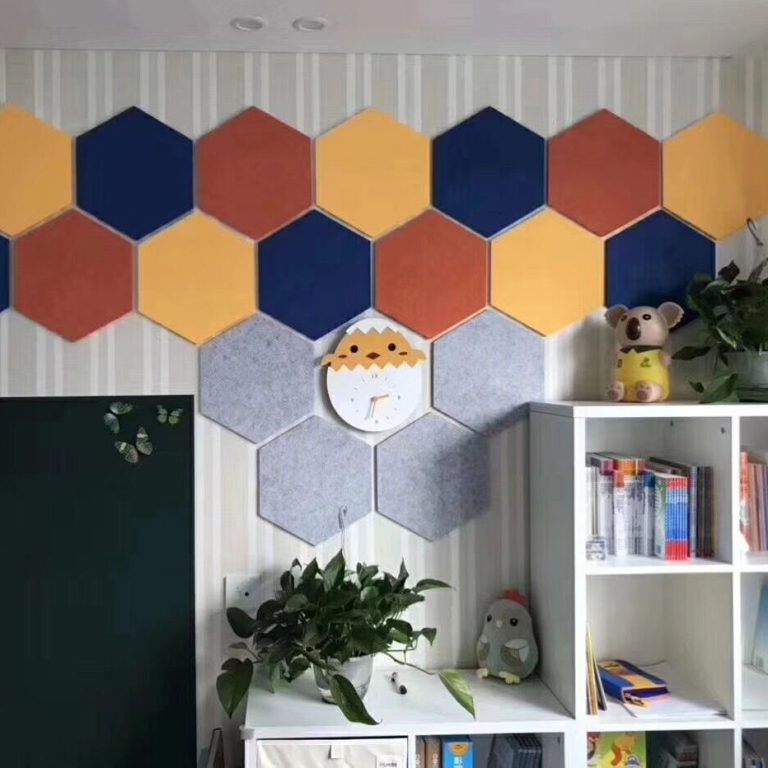
PET felt can form wall linings, decorative pieces and purpose-designed ceiling elements. Choose the format around available surfaces, visual requirements, access and the documented mounting. Absorptive finishes address reflections inside the room; they do not establish the sound isolation of a wall, door or window.
A wood slat panel combines a different visible face with its core, backing and mounting. Compare the complete wood slat acoustic panel construction with the proposed PET finish rather than treating the two as interchangeable materials. For a projecting design, use the 3D PET profile specification guide. Suspended elements need their own support and test arrangement.
Read acoustic data with the construction attached
Request the product code, specimen dimensions, mounting description, test method and frequency-band results together. Compare reports for equivalent constructions. Thickness and density are useful identifiers, but neither is a substitute for that evidence. An NRC value is not the percentage by which a finished room will become quieter.
ISO 354 describes laboratory sound-absorption measurement in a reverberation room. Referencing the method does not show that a particular Seninpanel panel has been tested. Record which report supports the proposed product and do not transfer a value to a different face, backing or air-gap construction.
Keep environmental and finish claims separate
Recycled content, indoor emissions and end-of-life options answer different questions. Ask for the declared content and its scope, the emissions evidence requested by the project, and the actual collection or recovery options available at the destination. Do not infer these from the word PET, a green color scheme or a generic sustainability statement.
Likewise, request fire-performance documents for the exact finished product and intended application. A report for another thickness, coating or assembly may not establish suitability. Have the responsible project team confirm the required evidence before ordering.
Approve the surface you will install and maintain
Inspect color and texture under the intended lighting, including adjacent sheets and visible cut edges. For printed or custom-cut pieces, approve a representative detail. Confirm substrate preparation, permitted fixings, service openings and replacement access before the cutting schedule is finalized.
Follow the selected product’s care instructions. Do not assume every polyester panel permits wet cleaning, repainting or added coatings. Use the PET acoustic panel maintenance checklist to record approved methods and access. Resolve moisture sources rather than treating a felt finish as a remedy for damp construction.
For supply discussions, review the Seninpanel PET acoustic panel range and send the product reference, application, finish sample, mounting section and required document list. That provides a clearer starting point than requesting a generic “soundproof polyester board.”