
The Evolution of Acoustic Materials: A Comprehensive Comparison of Sound Absorption Performance
Introduction
In the field of architectural acoustics, material selection critically impacts acoustic performance and user experience. With the rise of sustainable innovations, “sound absorption efficiency” and “eco-friendliness” have become central considerations for designers. This article explores the acoustic performance of different materials, focusing on the advantages of polyester fiber grille panels and their growing prominence in global markets.
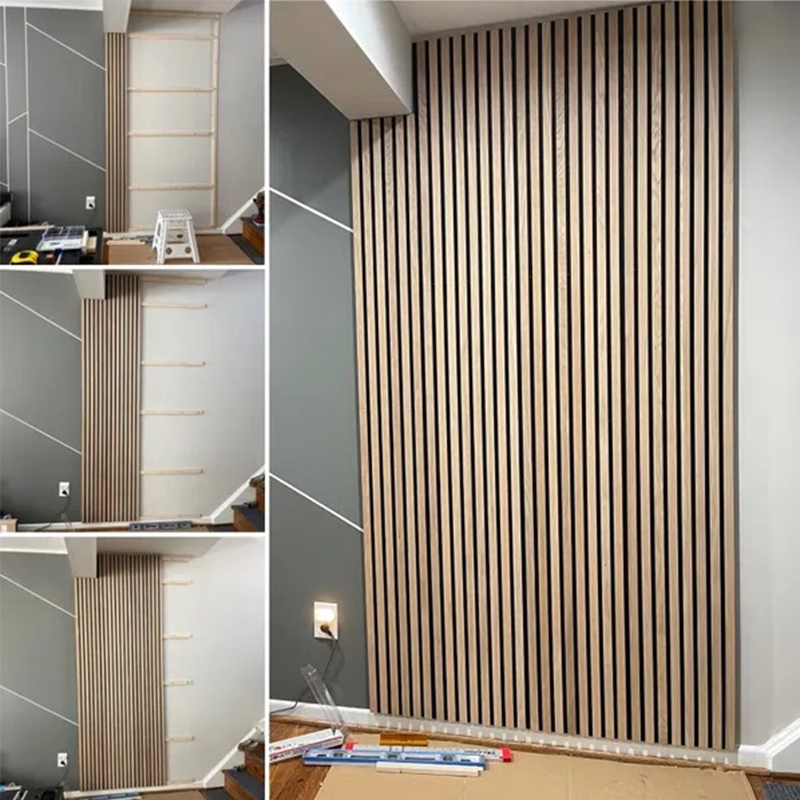
Key Metrics: NRC and Application Scenarios
Sound absorption capacity is measured by the Noise Reduction Coefficient (NRC) (0–1 scale). Higher values indicate superior performance. Materials vary widely due to density, thickness, and surface structure:
| Material Type | NRC Range | Primary Applications | Absorption Mechanism |
|---|---|---|---|
| Polyester Fiber Grille | 0.7–0.95 | Theaters, offices, commercial spaces | Porous structure + resonance damping |
| Fiberglass Panels | 0.6–0.9 | Industrial plants, server rooms | Fiber matrix sound trapping |
| Mineral Wool Boards | 0.5–0.8 | Ceilings, partition walls | Multi-layer porous absorption |
| Perforated Wood Panels | 0.4–0.7 | Concert halls, galleries | Cavity resonance + surface holes |
| Fabric-wrapped Panels | 0.3–0.6 | Meeting rooms, hotels | Friction-based energy dissipation |
Performance Analysis: Strengths and Limitations
- Superior Absorption: High-density fiber grids absorb broad-frequency noise (especially 500Hz–4kHz human speech range).
- Design Flexibility: Customizable colors, shapes, and patterns for seamless integration into modern interiors.
- Sustainability: Made from 100% recycled PET (GRS-certified), VOC-free, and formaldehyde-free (Class A+ emission standards).
Traditional Fiberglass/Mineral Wool
- Drawbacks: Brittle fibers risk airborne particles; poor moisture resistance promotes mold growth.
- Environmental Concerns: Non-recyclable post-use; some products emit volatile compounds.
Wood and Fabric-based Solutions Acoustic Wall Panel
- High Maintenance: Susceptible to humidity (wood) or dust accumulation (fabric).
- Fire Safety: Often require chemical flame retardants, compromising eco-credentials.
Polyester Grille Panels: Scenario-based Solutions
- Open-plan Offices
- 30–50% perforation rate + back-layer acoustic foam achieves NRC 0.9, reducing speech distractions by 35–50%.
- Commercial Spaces
- Curved or gradient-colored panels enhance aesthetics while increasing absorption coverage by 20% vs. flat surfaces.
- Educational Facilities
- Modular systems enable rapid installation and easy cleaning, ideal for high-traffic areas.
Market Trends: The Rise of Sustainable Acoustics
According to the Global Green Building Materials Market Report, recyclable acoustic materials will account for 45%+ of the market by 2025. Polyester fiber grille panels lead this shift with:
- Low Carbon Footprint: Production uses recycled PET bottles, reducing CO₂ emissions by 60% vs. conventional methods.
- Circular Lifecycle: Fully recyclable, biodegradable, and reinstallable without waste.
- Health Compliance: Zero formaldehyde, certified by WELL Building Standard and LEED.
Conclusion
In the race to balance acoustic efficiency, sustainability, and design innovation, polyester fiber grille panels stand out as a game-changer. For architects and designers committed to ESG principles, these panels symbolize the future of responsible, high-performance interiors.