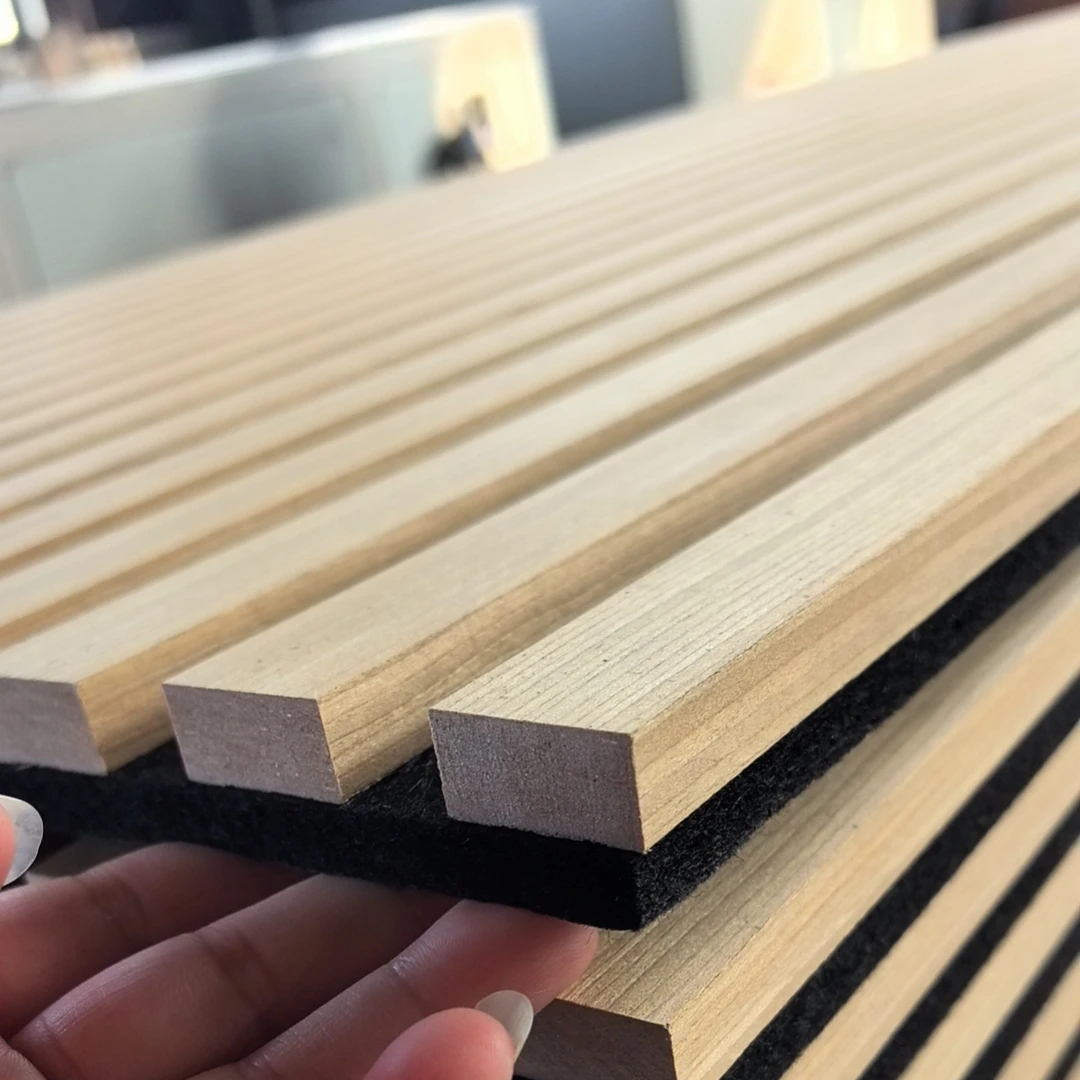
Wood Look Slat Wall Panel
Product Data
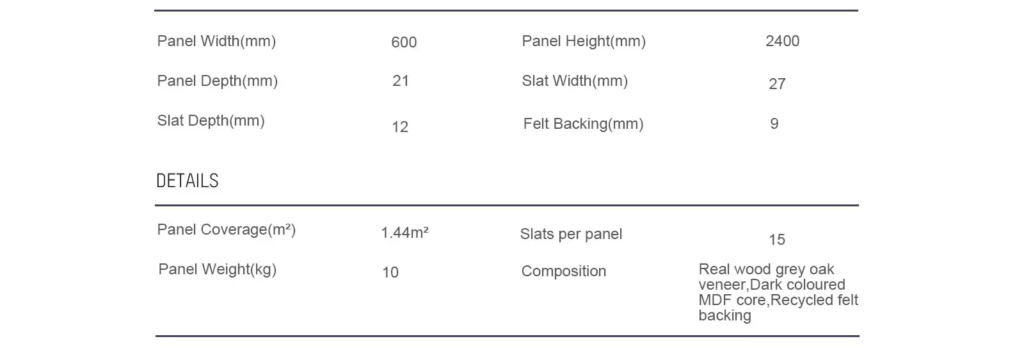
Model | LD35-15 / LD27-13 |
| Total Width | 600mm / 400mm |
| Slat Width | 35mm / 27mm |
| Gap Width | 15mm / 13mm |
| Length | 1200mm / 2400mm |
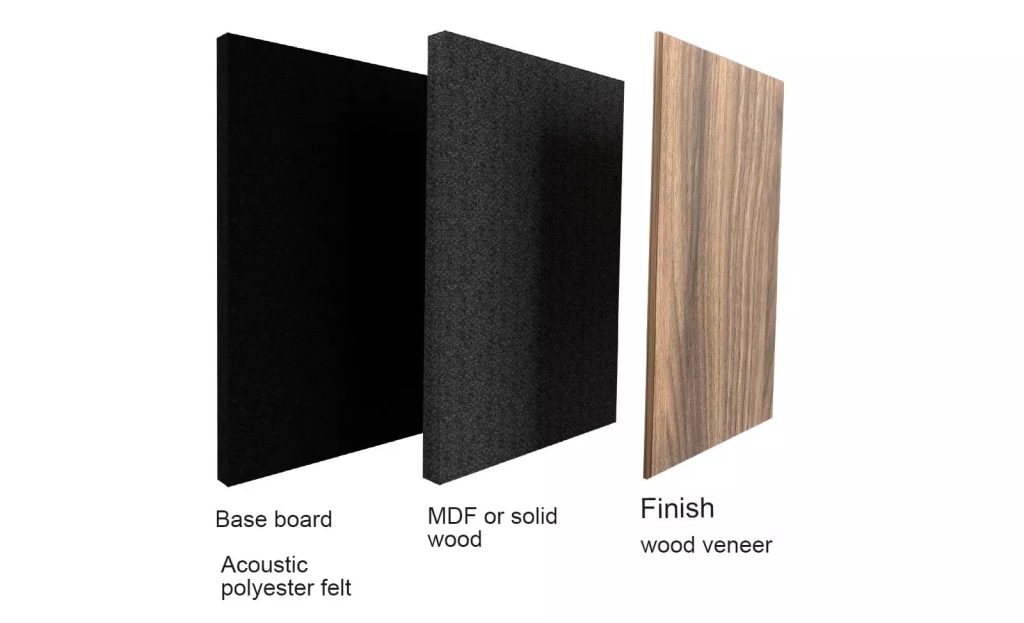
| Thickness | 21mm(9mm PET base board with 12mm wooden slat) |
| Base Material | 100% Polyester Acoustic Panel (class A flame retardant from ASTM E84 standard) |
| Wooden Slat | High Density Fiber Board, Solid Wood |
| Finish | Melamine Laminate, Veneer, HPL |
| Weight | 7.5kg Per Square Meter |
| Loading Capacity | 1000SQM/20GP, 2500SQM/40GP, 2900SQM/40HQ. |
Simple Introduction
Many Akupanel products are made from sustainable materials, such as recycled felt and wood sourced from responsibly managed forests. This makes them an eco-friendly choice for those concerned about reducing their carbon footprint. The use of recyclable materials and a focus on sustainability makes Akupanel a great choice for environmentally conscious consumers。
Structure
Advantages
1. Up to 3 meters height, cover floor to ceiling with single panel.
2. Wooden look finish, good decoration effect, blend in with other decorations.
3. Standard size products, can be ordered in large quantities and keep them in your warehouse.
Colour Options