

III. What are eco friendly acoustic panels?
Soundproofing the environment
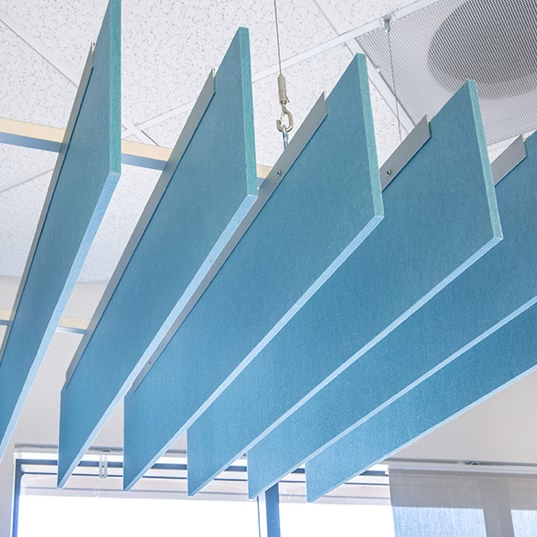
Modern noise control solutions include foam tiles and suspended ceiling systems. Wooden acoustic panels come in non-suspended, wall-mounted, or ceiling-mounted styles. They blend well into any interior.
Definition
Designers create wood acoustic panels (or strips) to reduce background noise and reverberation. Absorb, diffuse or attenuate sound waves.
Principle of Sound Absorption
Absorption: Conversion of sound energy into heat energy by means of a porous material (e.g. mineral wool core).
Diffusion: scattering of sound waves to eliminate echoes.
Attenuation: Stopping noise from traveling between spaces.
IV. When to use walunt acoustic wood wall panels?

Vertical Acoustic Panels
Purpose: To block the transmission of noise across rooms.
Suitable for open plan offices with high ambient noise.
Spaces where reverberation needs to be reduced (e.g. conference rooms).
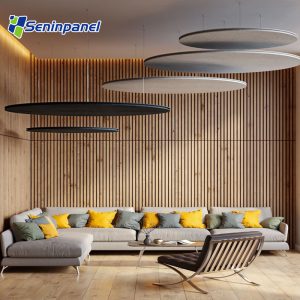
Horizontal Acoustic Panels
Purpose: Direct sound absorption.
Suitable for ceiling installation in theaters or auditoriums.
Design spaces that require overhead noise control while maintaining ceiling height.
V. Where to use acoustic wood wall panels?
Key Factors
Room shape, type of event and existing décor determine the best installation location.
Placement Guidelines
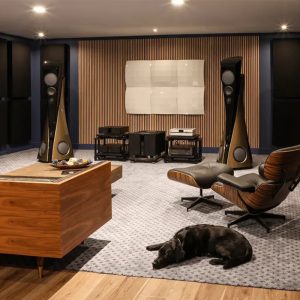
Small spaces (e.g., home offices, podcast studios):
Sound waves bounce off walls first. Installing a wall-mounted panel absorbs early reflections.
Large spaces (e.g., lobbies, restaurants):
Sound waves travel upward and hit the ceiling first.
Use suspended horizontal panels of varying heights to capture sound waves. Add breathable designs to high ceiling areas to enhance sound insulation.

Wooden acoustic panels are more than just noise control tools; they are also design elements that enhance interior décor. You can adapt smooth walnut slats and size, sustainable options to fit the needs of any project.
Learn about Seninpanel’s solutions
Seninpanel specializes in precision-engineered wood acoustic panels that combine performance with timeless design. Our products offer Customizable sizes, finishes and acoustic ratings.Seamless integration into commercial, residential or institutional spaces.
[Learn how Seninpanel’s wood acoustic panels can transform your next project.]